


Long ago, about 400,000 years after the beginning of the universe —the Big Bang — the universe was dark.
Science at ASU: Transforming the future
A hub for scientific inquiry, exchange and collaboration, Arizona State University is transforming higher education, research discovery and entrepreneurial opportunity in Arizona and the nation. More than 27,000 students study science, technology, engineering and math (STEM) at ASU with the widest range of choices available, from psychology and computer sciences to human origins, sustainability and space exploration. ASU students work side-by-side with distinguished faculty in advanced research projects focused on the challenges of today’s society, as well as projects that advance basic inquiry-based research. Students' intellectual growth is nurtured through close-knit research communities that encourage them to share their challenges and experiences with like-minded peers.
As a Research I university, ASU incorporates intellectual fusion with an accent on teamwork to power interdisciplinary world-class research institutes, such as the Biodesign Institute; the Julie Ann Wrigley Global Institute for Sustainability; and the Institute for the Future of Innovation in Society. These institutes are among dozens focused on today’s societal needs, such as creating new vaccines for developing countries, offsetting loss of biodiversity, addressing climate change, need for alternative energies and creating culturally-informed approaches to address obesity, urban growth and the spread of infectious disease. ASU’s research centers and initiatives provide Arizona and the world a vital resource for cutting-edge technology, an engine for redefining research and discovery and an avenue for contributing scientific and policy expertise to the areas of greatest human need.

Real-world research and professional experiences are critical to advancement post-graduation in jobs and careers. ASU offers the broadest range of choices and opportunities to tailor the career of your dreams. more

ASU offers a range of K12 experiences for students, including 84 summer programs for kids, resources for teachers and teacher training in STEM. more

There is something for everyone at ASU, whether you are looking for community engagement programs, summer programs, world-class museums, internships, events, teacher training or K-12 activities. more
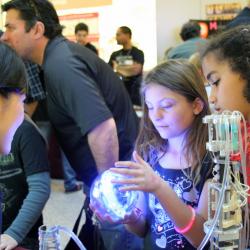
At ASU, community engagement is not something we simply value. It’s become who we are. We have nearly 500 community engagement programs across the Valley. more
Recent news

February 27, 2018
“A society is defined not only by what it creates, but what it refuses to destroy,” environmentalist John Sawhill said.

February 27, 2018
Today the Arizona State University Foundation will accept a $2 million grant from the Maricopa County Industrial Development Authority (MCIDA) to fund a new workforce development project to acceler