

Magazine
EU legitimacy in question
From lost referendums to growing contention of the EU's role in policies, people's commitment to the European project has diminished further this year.
Friday
1st Sep 2017
From lost referendums to growing contention of the EU's role in policies, people's commitment to the European project has diminished further this year.

EUobserver wishes you a new Europe! This year's Europe in Review edition looks back at all the events of 2016 that will define the coming year.

The V4 countries - Czech Republic, Hungary, Poland and Slovakia - has turned the EU's migration policy around. They now set their sights on reshaping the union.

The EU's migration policy in 2016 was marked by a record number of deaths at the Mediterranean and deep rifts among member states on how to handle asylum.

The British vote to leave the EU was, in large part, the product of neglect and circumstance. But it is also too late to put the genie back in the bottle.

EU trade policy has become a target for environmentalists, transparency advocates and populists alike, casting a doubt whether Europe can still close trade deals.

The outrage at Volkswagen's industrial-scale emissions cheating has not subsided, but the EU and Germany have done little to punish the automaker or provide compensation to its customers.
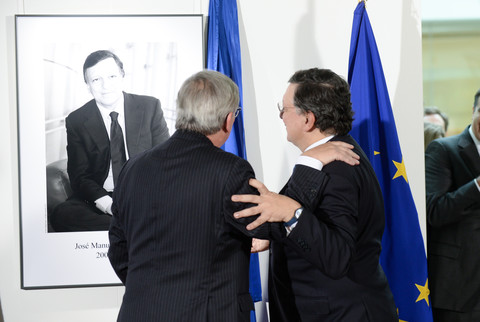
Just days after Britain’s vote to leave the EU, the bloc was rocked by the news that commission ex-president, Jose Manuel Barroso, had landed a top job with Goldman Sachs.
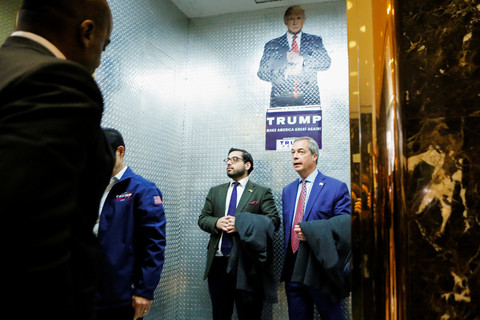
The election of the property magnate after a campaign marked by racism, sexism and "post-truth" arguments will have consequences for EU security, politics and public debate.

EU states will, this year, try to save Schengen by sealing external borders and try to keep Britain in the Union: A big agenda, which makes normal EU law-making look small.

The European Court of Justice delivered stunning verdicts in 2015 to protect citizens' fundamental privacy rights over mass-surveillance.

EUobserver will continue to report on the EU exactly as it is - good or bad. But let's hope there will be better news to report in 2016.

2015 was a news-filled year. Here’s a look back at our 20 most popular articles of the year.

The anti-Ukraine and anti-Western propaganda became so shrill EU leaders launched a new counter-propaganda cell in the EU foreign service.

In January, Viktor Orban's inflammatory comments concerning migrants raised eyebrows. By the end of the year, politicians across Europe echoed his sentiments.

In July, Greek prime minister Alexis Tsipras was a night away from leading his country out of the eurozone. His challenge for the coming year will be to avoid new political tussles.
The year when borders came back to Europe.
Attacks in Paris, Copenhagen and the Thalys train have revealed a lack of cooperation between member states and put the Schengen area under pressure.
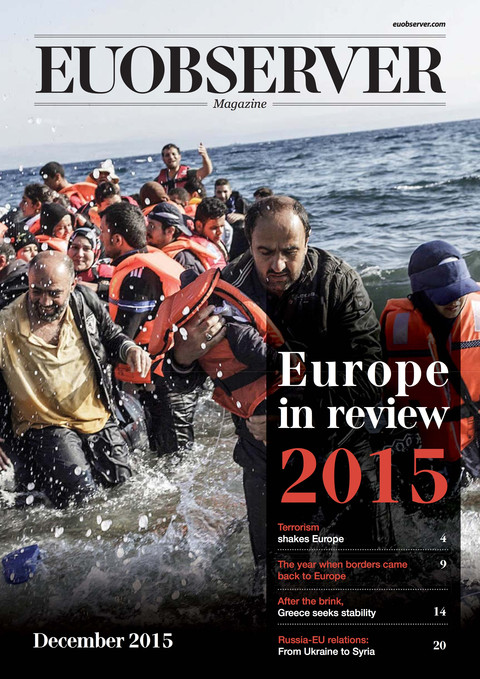
EUobserver's third annual review looks back at the main events of 2015: Terrorist attacks in France; the migration crisis; Grexit; and the Ukraine conflict. Download or order your copy here.

The prospect of an EU-US trade agreement was one of relatively few sources of comfort for EU lawmakers about the bloc’s struggling economy in 2013.
Reasons for delay abounded: not enough women, an east-west row over the next foreign affairs chief and a Slovenian minidrama. Still, the Juncker commission took office as planned, on 1 November.
The year 2014 shall go down as the date the European Parliament snatched away the right to nominate a European Commission president from national governments.
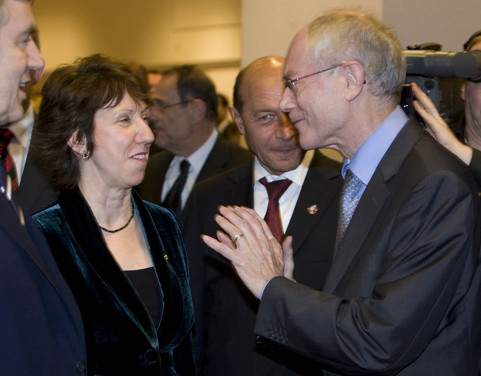
Jose Manuel Barroso, Catherine Ashton and Herman Van Rompuy bowed out of their jobs leaving small legacies.
European Commission President Jean-Claude Juncker was buffeted by the LuxLeaks revelations just days after he came to office. Yet the longterm effect may be beneficial.
A killing in the Jewish Museum in Brussels and an infant girl in the sea near Crete: fragments of two Middle East conflicts which just got worse.
After a year of suspended action, the EU needs to show some results in 2015. But changing political landscapes in member states could prove a distraction.
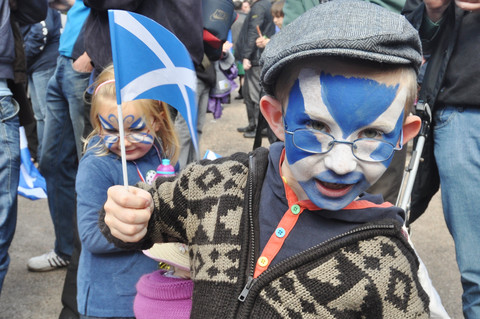
For a frenzied 72 hours of campaigning, the future of the United Kingdom was under threat. The 300 year old settlement binding together Scotland and England in danger of being torn up.

Just months to Britain’s next general election all bets are off. Can one of the beleaguered Conservative or Labour parties stumble across the winning line, or will Ukip's surge continue?
Pro-democracy protests made some headway in central and eastern Europe, with flawed laws repelled and an underdog candidate winning the Romanian presidential elections.
The latest war in Europe began on Friday 21 February 2014.