

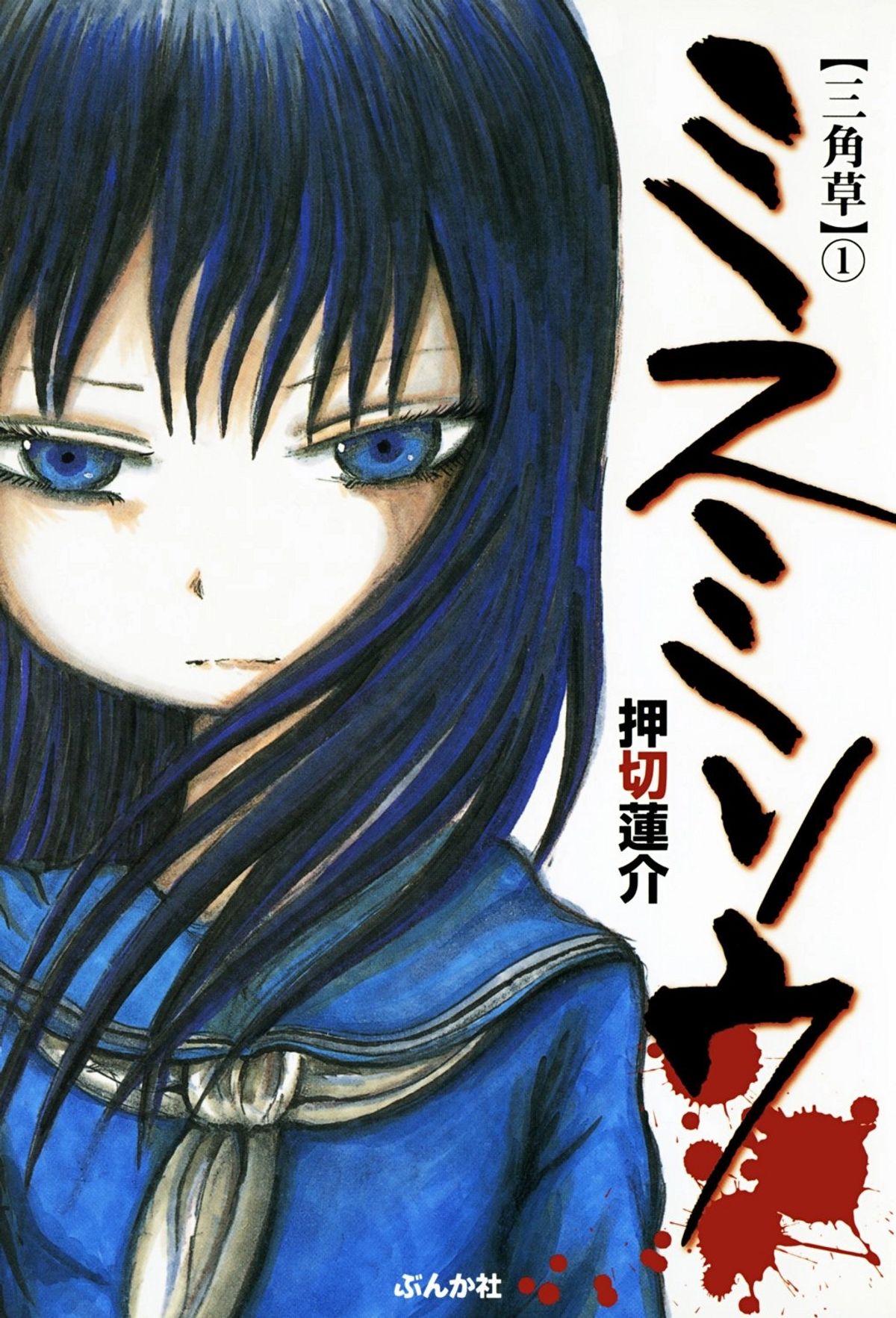
Nozaki Haruka's family moves to a small town due to her father's new job. Unfortunately, Haruka becomes a target of bullying in the new school, which is set to close in a few months due to the lack of students as a result of Japan's declining birthrate. Haruka tries her best to ignore them but the situation keeps worsening as a result of her frail teacher not being willing to deal with bullying during the final school months. Things begin coming rapidly to a head, leaving Haruka unprepared for the appalling tragedy that looms over her and soon all hell breaks loose.
Liverleaf (ミスミソウ, Misu Misou), a manga by Rensuke Oshikiri (who would later make Hi Score Girl), starts off as a drama about bullying and being unwelcome in a new town before rapidly descending into a plot that combines the thriller, horror and revenge genres. The manga was serialized in Horror M from 2007 to 2009. The series has been published digitally in English by Orange Inc. through emaqi.
Misu Misou contains examples of:
- Abusive Parents: Ootsuma is absolutely rife with this, with many parents of the kids being abusive to them in some way. It's a huge contributing factor to why the town is so messed up.
- Yoshie Tachibana's alcoholic parents fly into a rage if she only manages to buy them sparkling wine.
- Aiba's father was a violently abusive who would beat his mother until Aiba stabbed him. However, his mother proceeded to blame him for their father leaving, causing Aiba to hit her as well.
- Adaptational Alternate Ending: The manga ends with the entire class and Haruka dead, leaving her grandfather to leave town and tearfully apologize for being unable to help her. The movie elevates it just slightly to a bittersweet ending, showing Oguro graduating middle school as the sole survivor of her class and preparing to move to Tokyo. The experience has changed her, as she vows to live a better life for Haruka’s sake, and sadly reflects on what could have been.
- Adults Are Useless:
- Miss Kyouko Minami is the home room teacher responsible for Haruka's class, and all she wants to do is look the other way and not attract any unwanted attention to herself two months prior to graduation. The fact that she has her own inner demons to cope with in regards to a bad high school life doesn't help.
- The parents that start hassling Miss Minami consider themselves blessed that the very least, they're not raising bullying victims themselves.
- Alpha Bitch: Taeko Oguro is the leader of the girl group of bullies and is especially cruel. However, for all her cruelty towards Haruka, she's the only one in the group who wasn't involved with burning down her house.
- Axes at School: Averted. No bloodshed with dangerous weaponry is conducted within school grounds.
- Bitch in Sheep's Clothing: Aiba. He starts out as the one classmate who is kind to Haruka. Then we find out more about his home life, and what he is willing to do to stay with Haruka...
- Broken Bird: Although Aiba is a lot more messed up than he first appears, it's shown that he was horribly mistreated by both of his parents, giving him a warped understanding of romantic affection.
- Brown Note: Anything that reminds Miss Minami of her own hellish time in middle school and high school makes her vomit. Even the sounds of teenagers heckling and snickering can set her off.
- Camera Fiend: Mitsuru Aiba is often shown taking pictures and is even called "Camera Boy" by classmates.
- Central Theme: Abuse begets more abuse. Every character is the product of a failed society, with them carrying on the abuse imprinted into them due to the lack of positive authority figures helping them out.
- Darker and Edgier: It's a revenge horror story, in comparison to the author's more well-known work, Hi Score Girl.
- Death Glare:
- A frightening one from Haruka in chapter 6. Its comic panel occupies over 70% of the page.
- Aiba gets a few later in the story.
- Despair Event Horizon: Haruka, with Aiba's support, does what she can to endure being bullied from all sides by her classmates. By the time her parents are killed by arson and learns that the bullies are the perpetrators, Haruka is done being nice.
- Domestic Abuse: Aiba's father would beat up his mother for petty reasons. Eventually, Aiba stabbed him. Rather than be thankful, his mother blames him for their father leaving, causing Aiba to hit her as well. He even hits his grandmother when she objects to him wanting to move to Tokyo to live with Haruka, and later beats Haruka's grandfather because he felt that he was the reason Haruka didn't want to be with him.
- Downer Ending: After everything that happened, including most of the people Haruka encountered being dead, she wanders through the snow after finally getting her revenge, with a wound on her chest on the verge of death leaving herself lost and forgotten while regretting what she has done and of the tragedy that has befallen upon her family thanks to the bullies. Her grandfather, who is the only one in the family that is alive, rides a train out of town alone while apologizing to a hallucination of Haruka for not helping her sooner.
- Dramatic Irony: The bullies thinks that Haruka suspects them of being responsible of the arson that caused her parents' death when she came back to school. What they don't know is that she actually doesn't really know nor suspected that they were actually responsible of the arson and only came back to school to just graduate. She only learned the truth when one of Oguro's posse mocks about Haruka's mother being burned to death, revealing their involvement in the arson and trying to have her commit suicide.
- Dull Eyes of Unhappiness: Becomes Haruka's default expression once her parents die in a house fire and she begins slaughtering her classmates as revenge one by one.
- The Dying Walk: Haruka, bleeding out from a fatal stab wound to the abdomen spends their last moments wandering through the snowy hills of Ootsuma having just finished killing Rumi and Mitsuru.
- Eye Scream: "I-Is it better if I leave it alone??"
- Exhausted Eye Bags: A few characters over the course of the story. Taeko's become obvious and is commented on in the second half.
- Foreshadowing: Everyone seems to give Mitsuru a wide berth, and aside from isolating him, attempts to bully him by intimidating him physically fall flat.
- Freudian Excuse: The manga's main theme is that abuse begets more abuse, and as such nearly every character is a product of horrible upbringings or the toxic environment of the town. Most of the bullies have messed up home lives. As does Aiba. Zigzagged with Rumi, who actually has a good relationship with her mother, but was still the designated punching bag for her peers when Haruka wasn't in the picture.
- From Bad to Worse: At the beginning, Haruka is bullied in her new school and she tries to ignore them and not make her parents worry, but then things started to escalate since the homeroom teacher is unable to stop the bullying. Then the unthinkable happened, Haruka's home is set ablaze thanks to the bullies, resulting the deaths of her parents and putting her sister on life support. By the time she comes back to school, the bullies try to get her to commit suicide and when one of the bullies reveal their involvement of the arson on her house, Haruka snaps and starts killing her classmates and that's where all hell breaks loose as Haruka pursues to kill her bullies.
- From Nobody to Nightmare:
- Rumi goes from Oguro's victim when Haruka isn't around to being the one to burn down Haruka's house and attempt to kill Haruka and successfully kill Oguro.
- Haruka begins the manga just barely managing to endure her classmate's cruel and heinous antics to personally butchering the majority of them herself after her family's murder by arson by them, finally causes her to snap.
- If I Can't Have You…: Ikegawa resents Haruka over her rejecting him. Rather, this is what he deluded himself into believing. In reality, Haruka has no idea that Ikegawa harbors any kind of crush towards her. Ikegawa simply pegged Haruka as "out of his league" the instant she transferred to class and began talking to Aiba, and never even tried to put himself in any position to let his feelings be known.
- Lodged-Blade Recycling: Rumi at the end goads Haruka into charging her, so she plunges her knife into Haruka's abdomen and earns a beating from Mitsuru for it. However in the scuffle Mitsuru's messenger bag drops and all of his developed photography spills out of it, which includes a photo of Haruka's dad covering Shoko from the arson flames. This prompts Haruka to pull Rumi's knife off of herself to attempt to use not on Rumi but on Mitsuru.
- Little Red Fighting Hood: Haruka wears a bright red peacoat in the film adaptation.
- Nice Guy: Aiba is Haruka's only classmate that is nice to and supports her. Subverted in that he's just as mentally screwed up as the people who burnt down Haruka's house, and wants to be the only one who supports her.
- Nothing Exciting Ever Happens Here: The featureless backwater rural town of Ootsuma only partially explains why Haruka's class is so ridiculously mean. Mamiya and Ikegawa stave off the boredom by killing or torturing animals with their model guns or homemade crossbow. Oguro desperately wants to leave Ootsuma and her friends and family behind for Tokyo to pursue a career as a beautician, even against her own family's wishes and saw Haruka as her last resort to seeing that dream happen. Once these feelings of boredom and ennui are acted upon by picking on the weak, all Hell breaks loose.
- The Quiet One: Haruka is only willing to talk to Aiba though it's not so much that she is shy as much as she doesn't want to associate with her other classmates.
- Redemption Equals Death: After realizing that it is her fault that Haruka's parents are dead and several of her friends are missing, Oguro comes to Haruka and admits that it is all her fault, and that she accepts that there is no way Haruka could possibly forgive her. She does. However, not long after, Oguro meets up with Rumi.
- Revenge on the Bully: After her family is killed and her bullies try to get Haruka to commit suicide when they thought that she knows that they caused the arson on her house, she snaps and kills them after learning the truth. Things only escalate from there.
- Scope Snipe: Much closer range than most examples, Aiba is killed by Haruka with a crossbow bolt that goes through his camera into his eye.
- "Shaggy Dog" Story: In The Movie: Taeko lives to attend her graduation ceremony as the only surviving member of her class. She receives her diploma with a heavily bandaged hand, which strongly implies that Rumi's attack rendered it permanently disfigured. She reflects on happier times with Haruka, only to be left with a melancholy expression knowing those times are gone.
- Skewed Priorities: Aiba, moved by seeing Haruka's father protecting Shouko from an arson's flames with his body decides to immortalize the moment in a photograph.
- Small Town, Big Hell: Ootsuma, a small rural town that seems to be a complete drain on its citizens. The adults that grew up in it turn into alcoholics or basketcases, children that grow up together treat each other like war buddies at best, anyone with a modicum of self awareness wants out by any means, and newcomers get put through the wringer in the maelstrom of it all.
- Snow Means Death: Haruka's retaliation against her classmates begins as the winter snow picks up.
- Snow Means Love: Haruka and Aiba agree to go out on another date after snowfall to see the liverleaf push through the snow, but end up running into each other in chapter 14, where the snowfall is so heavy the scenery is desolate. Overcome with emotion after all she's been through and as Aiba promises to protect her through to graduation, Haruka and Aiba share a kiss in the harsh cold.
- Spared by the Adaptation: The film adaptation leaves Oguro alive to be her class’s sole graduate, as opposed to killing her by Rumi’s hands like the manga. She leaves for Tokyo, reflecting on her life and vowing to live a good life for Haruka’s sake.
- Status Quo Is God: Why everyone seems to resent Haruka's late transfer to their graduating class, more so than being stranded in a rural backwater town.
- Vengeance Feels Empty: Haruka appears to derive no pleasure or satisfaction at all in slaughtering her classmates. At the end, as she bleeds out while wandering through the snowy hills, she is left with tears and regret in herself, and thinking of her parents and sister.
- Woman Scorned: Oguro was really looking forward to using Haruka's help in getting her foot in the door to become a Tokyo beautician. Once it became clear that wasn't going to happen, and Haruka started spending more time with Aiba than with her, the resulting resentment lead to Oguro having the whole class the green light to start bullying Haruka.