

Common in Anime and Western Animation. Prior to the 1990s, this was the standard in Western Animation in the U.S. (other countries have different standards for this) where voice actors are lumped into a simple list under the heading "Voice Characterization", or something similar. This makes viewers who recognize an actor's name have to do a search to determine which character they were, which can be especially problematic if they used an alias for this production (or if someone has a very large vocal range).
In anime dubbing, this is generally a sign that the project did not have a SAG-AFTRA contract, and at least one, if not the majority, of the voice talent are using aliases.
This is also prevalent in dubbed anime and video games, but only for the dub cast. The credits list the Japanese voice actor in the standard Actor-Role method, while the English voice actors, by contrast, use the stock-standard "block of names." Many live-action dubbed films go farther note and don't list the English dub actors at all.
This trope is becoming less common as voice actors are slowly gaining more recognition and respect in and outside the industry.
How many credits are unspecified can vary:
List of Actors' names only
All VAs involved in the production are listed, but the credits do not tell you which characters they voice. While it does lead to guesswork and deduction in order to figure out who voiced whom, at the very least it creates a good starting point to go off of. Both non-union and union productions perform this type of crediting, although non-union credits run the risk of including aliases and leaving certain names out. This was very commonplace in western animation during the '80s and '90s, but by the 2000s has fallen out of fashion in favour of more specific, film-like credits. However, this still continues for most new animated shows from the United Kingdom.
Main Characters only
This type seems like an aversion at first, since all major characters have their actors properly credited. On the other hand, any recurring, special guest, or otherwise minor characters are relegated to "Additional Voices" or similar listings. This also means that the credits for the main actors only have their main characters listed and not any secondary or incidental roles they play. In some cases, such actors may be listed in both the credited role sections and the additional voices section. In a series, this may result in crediting main actors/characters that may not appear in a particular episode. Common in both union and non-union western animation and dubbed anime projects.
See also Uncredited Role, for when actors are not credited at all.
Examples:
- Fairly common in Transformers shows when they would only list a list of the voice actors of the series (averted in the original 1986 movie, the live action films, Animated and Prime). The RTM-1 dubs of some of the Transformers anime (released as Transformers Takara) took this further by not crediting the English voices at all.
- Almost every entry in the Sonic the Hedgehog franchise, games and cartoons both, only list the VAs and don't pair them with characters. It got worse in the 2010-onward games with the Studiopolis voice cast; some VAs use aliases and Laura Bailey isn't credited period. This led to a misconception where Dave B. Mitchell was thought to be the voice of the True Final Boss of Sonic Frontiers, before Mike Pollock confirmed it was him
 .
.
Companies
- Disney is usually one of the worst offenders when it comes to either in-house or licensed productions, typically in their animated works and in video games. Unless an actor is playing a significant role in a film, they're usually shoved into a "With/Featuring the Voice Talents of" list. The most likely reason as to why they do this is because they want to maintain the "illusion" of their characters being the same characters, voices and all, as in their original works.
- All animated Disney films from The Three Caballeros to The Sword in the Stone did this, with movies before Caballeros not even showing the actors' names at all. (The only exception to this rule prior to The Jungle Book (1967) onwards was Alice in Wonderland.)
- Not only that, nearly all Disney TV series from the '80s and throughout the '90s didn't list who played what characters, with Pepper Ann being a notable exception during that time. The series from Disney Television Animation starting with Gravity Falls tend to only list identify who voiced the main and supporting characters with the other minor characters only being listed under additional voices with no specification on who voices who. Sofia the First, Future-Worm!, Elena of Avalor, Tangled: The Series, DuckTales (2017–2021), Fancy Nancy, and Big Hero 6: The Series are currently the only exceptions to this. As for their shows before Gravity Falls:
- American Dragon: Jake Long credited the characters in their roles during season 1, but in season 2, the series switched to a list of names.
- Lilo & Stitch: The Series did nearly the opposite of American Dragon; season 1 used only a list of names, but season 2 at least credited all the main voice roles with their characters, though the voice cast for minor characters were still lumped into a separate list.
- Recess lists who played who for the main cast, and then everyone else's voice actor is listed as "Additional voices", not saying who voices who, which carried into most of the dubs of the series (and it often varies on if Miss Grotke's going to be part of the "main" or "supporting" cast, she's "supporting" in most foreign dubs).
- Disney Infinity also has a block of name credits in each of the three games, with the separate credit of "and Anthony Daniels as C-3PO" in 3.0 Edition.
- Gameloft's Disney-licensed games Disney Dreamlight Valley and Disney Speedstorm both also list their voice actors without identifying their characters in their credits. While the presence of certain names such as Tim Allen, Pat Carroll, and Ming-Na Wen make it very clear which characters they're voicing, it gets harder when Other Darrins get added to their lists.
- One bad case with Speedstorm came in its Season 3 update, which added seven playable characters but only six new voice actor names. Five of the new names were obvious role reprises (Chris Sanders as Stitch, Kevin Michael Richardson as Captain Gantu, Tara Strong as Angel, Kaitlyn Robrock as Minnie Mouse, and Tress MacNeille as Daisy Duck) while the sixth new name (Micah Aliling) was easily identifiable as being the new voice of Lilo through the process of elimination. But Jumba, whose original voice actor David Ogden Stiers died in 2018 and whose voice actor from Stitch! and Stitch & Ai Jess Winfield did not reprise the role, was harder to figure out since he hasn't been voiced by someone other than those two before. The website Behind the Voice Actors initially determined that Joel McCrary, the current official voice of the already-playable Baloo, voiced Jumba after listening to his demo reel, which had him using what they believed to be a Jumba-esque voice. However, this turned out to be false as Piotr Michael, who already voiced Randall Boggs in the game, confirmed on his Instagram that he voiced Jumba, forcing BTVA to make a correction.
- Another problem arose in Season 6 of Speedstorm when The Little Mermaid characters were added, as Gameloft forgot to add the proper credits for them. Though Ariel and Prince Eric had their respective original voices Jodi Benson and Christopher Daniel Barnes reprising those roles, especially since they already did so in Dreamlight Valley, and Jim Cummings (who already had a credit due to voicing Steamboat Pete) reprising his role as King Triton, Ursula was a problem to identify as her original voice Pat Carroll died not long before Dreamlight Valley's early access release. Some people thought it was Dawnn Lewis voicing her again after The Simpsons short Welcome to the Club, but it was clearly not her (especially since The Simpsons often doesn't seek out the original or current official voices when parodying well-established characters). It wasn't until Season 7 when it was revealed that Debra Wilson is now Ursula's new official voice.
- One bad case with Speedstorm came in its Season 3 update, which added seven playable characters but only six new voice actor names. Five of the new names were obvious role reprises (Chris Sanders as Stitch, Kevin Michael Richardson as Captain Gantu, Tara Strong as Angel, Kaitlyn Robrock as Minnie Mouse, and Tress MacNeille as Daisy Duck) while the sixth new name (Micah Aliling) was easily identifiable as being the new voice of Lilo through the process of elimination. But Jumba, whose original voice actor David Ogden Stiers died in 2018 and whose voice actor from Stitch! and Stitch & Ai Jess Winfield did not reprise the role, was harder to figure out since he hasn't been voiced by someone other than those two before. The website Behind the Voice Actors initially determined that Joel McCrary, the current official voice of the already-playable Baloo, voiced Jumba after listening to his demo reel,
- The credits of the Kingdom Hearts series properly attribute the voice actors to the Original Generation characters and crossover characters from other Square Enix games, but in most games, the Disney roles are just listed as "Disney Character Voices" for the English release, which tends to cause trouble when The Other Darrin hits. However, Barbara Dirikson is properly credited as the Fairy Godmother from Cinderella in Kingdom Hearts III: ReꚚMind, which lists only the actors who were not present in the base game, because she is the only Disney character to appear exclusively in the DLC so a single name listed under "Disney Character Voices" would have given it away anyways. Kingdom Hearts: Melody of Memory also properly credits Corey Burton as Yen Sid, Bret Iwan as Mickey, Tony Anselmo as Donald, Bill Farmer as Goofy, and Dirikson as the Fairy Godmother, rather than lump them as "Disney Character Voices" (although it helps that Burton is also credited as Ansem the Wise). The Japanese releases do attach the characters' names to their voice actors for the Disney characters, averting this.
Non-English Dubbing
- In most Hungarian, Romanian, Czech, and Slovak dubs, a lector reads the names of the main voice cast, the staff members, and the recording studio over the credits. The characters' names are almost never mentioned.
- Same happens with most Polish dubs. To make matters complicated, the amount of dub credits the lector reads depends on the time (if too little, the voice reads only the information about the dub studio) and, in some cases, the presence of a non-instrumental song during credits. There are some dubs which put the dub credits on-screen (f.e. most of movie dubs made for cinemas).
- This is also present to some extent in Croatian, Serbian, and Slovenian dubs, mainly those produced for Nickelodeon (and for the latter two, Minimax). Some dubs produced in said languages avert this trope, while some use on-screen credits.
- Almost every Latin-American dub ever. Latin-American Spanish dubs handled by Buena Vista International (Pixar films and Disney series and movies) do credit their dubbers, but only after the original credits.
- Brazil only credited dubbers on occasion before The New '10s, when it became commonplace through either a Motor Mouth spoken list (mostly within dubs produced for Cartoon Network) or a written one - which can enter this trope when only the main cast is listed along with the dubber, a massive "additional voices" or just lists without saying the characters.
- A majority of foreign content dubbed into Indian languages such as Hindi, Tamil, Telugu and the rest, the voice actors and its dubbing staff all go uncredited. But since the internet has been boomed with places dedicated to find the voice actors, it has been getting somewhat easier since the early 2010s. It has also gotten better with the idea of those dedicated to finding the voices online through social media. Although it does not change the fact that the voice actors still go uncredited throughout 90% of the time. Films of foreign films released on DVD or Blu-Ray with dubbing information is not impossible, as there are some releases that have it. But that is after the original ending credits and it's quite rare.
- Many series released by Geneon (before they died, obviously). They would list the Japanese actors in detail updated each episode at the beginning of the credits. The English voice actors had to settle for an alphabetical block of names toward the end, regardless of union status.
- A few of Saban's early English dubs of anime never listed voice actors, while some in the '90s only credited the main actors for characters (ie: Eagle Riders, Honeybee Hutch) and left the rest of the voice cast uncredited. Despite this, the dubs had union contracts.
- All dubs by ZIV International (and a lot of obscure '80s anime dubs in general) lack their voice acting credits.
- Pokémon the Series: The anime's English dub has always been this way, and remains so to this day. The first two seasons actually featured an alphabetical list mixing the English and Japanese casts together, despite the Japanese version never being legally available in the US, presumably due to many of them voicing Pokémon whose voices were kept for the dub. After that, only the English cast was credited, with the Japanese cast going unmentioned. The exception to all of this is Ikue Ōtani, who's received a special "Voice of Pikachu" credit before any of the dub staff since the eleventh season.
- No dub from 4Kids Entertainment ever featured proper voice credits, even their theatrical films like Pokémon: The First Movie.note Notably, their projects were always non-union.
- Both dubs of AKIRA. Coincidentally, both were non-union. Newer remastered releases don't feature any English credits and only feature a list of Japanese voice actors without roles. The bonus features do have a behind-the-scenes look at the dub, which features Johnny Yong Bosch (Kaneda), Joshua Seth (Tetsuo), and Wendee Lee (Kei), but that's the closest it gets.
- Bleach lists the English voice cast, but not their roles.
- Naruto has only the main characters credited with their roles. Everyone else is listed alphabetically with no attached roles. Despite this, the dub is indeed union, and the longest-running unionized anime dub ever.
- GUN×SWORD has English credits, but doesn't list the voice cast.
- One Piece: The Odex releases used the Japanese credits, with the only English being an appended copyright notice; many of the Odex actors were discovered thanks to fan interviews. 4Kids listed each actor without their characters. Funimation avoided this with their release for years before ommiting English credits altogether from later episodes.
- Dragon Ball and Dragon Ball Z:
- Funimation's dub (including the collaboration with Saban and Ocean), as originally aired and released on DVD. This was corrected for DBZ's remastered season sets, although a few voices still weren't listed, and a couple were miscredited. DB's season sets still contain this trope, as well as some of the DBZ movies.
- The international Blue Water dubs of Dragon Ball GT and the original Dragon Ball featured an alphabetical list of the voice actors' names with no roles listed. This also included a couple aliases, since Blue Water does not have a contract with ACTRA (instead holding one with CLAC, an entirely different union).
- Sailor Moon:
- The original DiC-dubbed episodes just feature an alphabetical list of the regular voices, while the later Cloverway episodes have a list of all the voices with some misspellings. Because this group of Toronto-based voice actors rarely works on anime, many voice actors have no other roles to go off of. As a result, there's some debate on who voiced many major characters, notable the Kisenian Blossom in the R movie, Princess Snow Kaguya in the S movie, Mistress 9 from the S season, and Queen Nehellenia (the season's Big Bad) in the SuperS season. All of this despite the dub being recorded with union (ACTRA) contracts.
- Played straight in Viz's dub of Sailor Moon Crystal, which does have English credits, but the English cast is listed alphabetically not assigned to roles. It's also only the regular cast, meaning there might be some uncredited voices. Some voice actors are also accidentally listed alongside their aliases (like Danielle Judovits and "Danielle Nicole"). The dub had union contracts for the Eternal films, which properly credited almost everyone, but a few small roles were uncredited.
- The English dub credits for Speed Racer lists the actors, but never state who voiced whom. It also only listed three of the actors — Corinne Orr, Jack Grimes and Jack Curtis, to be specific; Peter Fernandez, who voiced Speed and Racer X, wasn't listed with the rest of the voice actors, only being credited for his voice direction and writing duties. It wasn't until years later when some of the surviving cast members revealed which roles they exactly played during convention appearances and the like; for example, Fernandez stated in the commentary for the 1993 movie that, in addition to his two main roles, he also voiced some background characters, such as the thug in yellow from "The Car Hater."
- Ninja Scroll, which featured an alphabetical list of aliases for its cast credit. Trying to figure out its English voice actors takes quite a bit of detective work.
- Revolutionary Girl Utena credited only the main cast, but the voice actors voicing the main cast were the only ones in the show at all, so while no actors were uncredited, some smaller roles were.
- Rather bizarrely, the Italian dub of End of Evangelion, and possibly the actual series, actually translates the movie's credits into English (unlike the English dub of the movie, which left them untranslated), but only lists the voice actor credits for the English dub, despite the fact that the English dub isn't even included on the Italian DVD.
- The Castle of Cagliostro is an odd case. The 1992 Streamline dub was union, but of course only credited the actors in an alphabetical list. The 2000 dub from Animaze was non-union and only featured an alphabetical list of aliases. The 2015 Blu-ray release from Discotek featured both dubs, but had new English credits that properly credited the actors in both dubs with help and research from the original dubbing teams. Most of the names for the 2000 dub were still aliases though, as only a few had given Discotek the okay to use their real names.
- Yokai Watch:
- The Sprite Animation Studios dub credits the actors, but never credited which characters the actors voiced. It wasn't until Twitter announcements from conventions stated who played who, and this was averted for the first movie, where they credited the actors for which characters they voiced.
- The Italian dub credits only four voice actors missing who is whom. A good ear can get that the four voices are Nathan, Whisper, Jibanyan and Manjimutt, but it's still missing everyone else. Starting from episode 27 they also credit Katie, Eddie, Bear and Komasan's voice actors, but everyone else is still missing.
- Serendipity the Pink Dragon does credit actors at the beginning, but never stated who voiced which character. Worse is that many of the names lead to no one. The only closely-identified actor is Michael Sorich, who voiced Smudge, due to his voice being similar to Morton from Swiss Family Robinson.
- Slayers started off crediting the actors with their characters (although since the dub started off non-union, this included many aliases), but later switched to only crediting the important characters once per tape. This means that on the DVDs and streaming, the credits only update every 3 or 4 episodes. However, given the dub's small voice pool, almost all of the uncredited characters were voiced by one of the credited actors. The dub switched to union contracts for the fourth season, and began properly crediting everyone.
- Samurai Pizza Cats only lists the voices for the main roles in the series without identifying who voiced who. While many of the characters are easy to figure out for those familiar with the Montreal vocal pool, this also lead to not only to several mis-identifications with the characters; such as Jerry Atric notably being miscredited to Terrence Scammell until he eventually came out and stated that the role was actually voiced by Mark Camacho. This also resulted in most of the supporting and additional voice actors (including Michael Rudder, Arthur Holden, Aron Tager, Gary Jewell, and Walter Massey) being omitted entirely, leaving several actors and characters remaining un-identified for several years.
- The English dub of Ninja Senshi Tobikage, also known as Ninja Robots, credited a small list of LA-based voice actors (Doug Stone, Cam Clarke, Wendee Lee, etc) that weren't involved in the show at all.note The final dub was actually recorded in Miami, and the voice cast is entirely unknown aside from a few that one of the actors confirmed in the show's Wikipedia talk page.
- The English dub of Reign of the Seven Spellblades gives the voice actors for minor characters in a block of "Additional Voices", whereas the Japanese dub named their roles individually. We do know that Conner Allison voices Marco the troll, because he identified the role on his Twitter account.
- The dub credits for New Panty & Stocking with Garterbelt, for most languages, only credit the voice actors for Panty, Stocking, Garterbelt, Brief, Scanty and Kneesocks, with a few also including the ones for Polyester, Polyurethane and Gunsmith Bitch.
- Digimon:
- The English dubs of Digimon Adventure and Digimon Frontier only listed the voice actors for the main characters and didn't list their roles.
- While Digimon Data Squad listed the voice cast for each individual episode, it didn't state which roles the actors voiced.
- A variant can exist on albums, where the liner notes list the musicians. While some avert this by specifically noting the individual musicians track-by-track, others just bunch all of the musicians together into one list. So for instance, an album may have three people listed on drums, but no indication as to who specifically played on any given track. (Of course, this is averted again if say, only one drummer played for the entire album.) Other times, the album may list the contributing musicians, but not credit them for which instrument they played.
- Da Yoopers have a similar variation on their second and third albums, Culture Shock and Camp Fever. All contributing musicians are listed in the liner notes, but there is no indication as to who fronted the Vocal Tag Team, and no indication as to who was actually a band member versus who was merely a guest. The latter does not credit instruments, either. As a result, nobody knows (among other things) who sang "Ruthie Rollover", "Chiquito War", or "Beer-Beer-Beer" on the former, or who played harmonica on "Cow Pie Song" from the latter. However, on Culture Shock, guest musicians Bertha Hintsala and Sandy Kemppa are at least mentioned by name before their respective songs "Iso Sika" and "Da Couch Dat Burps", and Glenn Adams can be picked out on "Yooper Talk" and "Dear Mr. Governor" due to him having named appearances on later albums.
- X Minus One's "The C-Chute": The radio cast are listed at the end of the episode, but the credits do not tell you which characters they voice, except for the program's narrator (who introduces and concludes the episode, but isn't part of the character list).
- Bravely Default contains a complete cast list, but does not match actors to characters.
- Dragon Rage: Though the voice actors are listed, their roles are not.
- Valve has a policy to only list the names of the people who were involved in the production of their games, without naming specific roles. It becomes less "Who voiced who?" and more "Who were even doing voice acting?" The answer, as it turns out, is "none of them" because the voice actors aren't actually included in that list. From Half-Life 2 onward, they added a separate listing for all the voice actors along with their roles, making it an inversion of the trope. The question then becomes "Who did what on actual development?" (meaning level design, modeling, artwork, writing, sound, music, and more).
- LEGO Dimensions has a block of name credits... that lumps the actual voice cast and the Fake Shemps — which the game has a large amount of — together, giving the unaware the impression that Harold Ramis, William Hartnell, Patrick Troughton, Jon Pertwee, and Johnny Cash all rose from the grave together to do voiceovers for the game alongside Troy Baker, Tom Kane, Elizabeth Banks, Roger Craig Smith, Nolan North, William Salyers, André Sogliuzzo, Chris Pratt, and Gary Oldman among others. (Cash is credited for the usage of the archival audio of his guest spot in The Simpsons episode "El Viaje Misterioso De Nuestro Jomer," which was recreated into a level of the game, by the way.)
- The PC version of DreamWeb credits the actors who voiced the dialogue, but never states who voiced which character. The only guess is that Ryan is voiced by Martin T. Sherman, as he is top billed and his voice is reminiscent of his performance as Thomas, a character he voiced many years later.
- Played straight in the original 1.0 release of Final Fantasy XIV. It featured a cast-list of actors from the LA region (such as Steve Blum, Nolan North and Kate Higgins) who all provided their voices, but doesn't specify which characters they voiced.
- Averted in the "A Realm Reborn" relaunch of the game and subsequent expansions. The actors of principal characters from the MSQ (in all four supported languages) are given proper attribution in the credits. From Shadowbringers onwards, this even extends to characters introduced in side-content, such as normal and alliance raids.
- Nintendo:
- Metroid Prime Series: None of the actors are credited at all. This has lead to a significant debate over whether or not Jennifer Hale voiced Samus Aran, especially as not even the games' audio lead is certain. Instead of going through the usual casting process, they simply took submissions from various actresses for pain and death screams, and chose which recordings to use from that selection. We know that Samus' main voice was done by an actress with the initials 'JH', while her death scream was done by a 'VM', suspected to be Vanessa Marshall, which wouldn't be confirmed until 2023 in a tweet she made celebrating the release of the Remastered version of the original game.
- Games in the Super Mario Bros. series do credit the voice actors, but often times they do not specify who voices who. This became an issue starting in the mid-2020s when Nintendo started to recast their characters again:
- Rather famously, after Charles Martinet retired from voice acting in 2023, his roles as the voices of Mario and Luigi were recast in Super Mario Bros. Wonder. On social media Nintendo said that the new actor would be revealed in the credits, only for the credits to use the traditional "block of names" format that don't actually say who voiced the famous brothers. Kevin Afghani confirmed he voiced the brothers on Twitter.
- Mario Kart World was when Takashi Nagasako (Donkey Kong) and Samantha Kelly (Peach, Baby Peach, Toad, and Toadette) were replaced, as evident by their names being absent from the credits (and by a tweet by Kelly noting she had been replaced), but since the credits do not specify who voices whom, fans couldn't tell who exactly they had been replaced with just like with Wonder. Their replacements were eventually revealed about one month later post-launch; Donkey Kong Bananza (which does specify who voices whom) reveals that Kouji Takeda had replaced Nagasako as DK, reprising the role from the Japanese dub of The Super Mario Bros. Movie, while Kelly's replacements in her roles confirmed their roles on Twitter / X: Courtney Lin voices Peach and Baby Peach, Laila Berzins voices the playable Toad, Paul Castro Jr. voices the male NPC Toads, and Laura Stahl voices Toadette.
- Super Smash Bros.: While Super Smash Bros. 64 and Super Smash Bros. Melee do properly say which voice actors voiced which characters if you shoot their names in the credits (with some exceptions), the credits from Super Smash Bros. Brawl onwards do not, thus requiring either prior knowledge of who they voiced or the actor to come out and say it themselves. The voice clips found in the Sound Test menu in the Japanese versions of Super Smash Bros. for Wii U and Super Smash Bros. Ultimate do list the voice actor names corresponding to each character, but none of the other versions do.
- Paladins lists its studio staff (3D Modelers, concept artists, coders etc.) as they each get their own section on the credits screen. When it comes to voice actors, however, they are listed in one big lump, and are not directly credited. For a few examples, Jad Saxton, Lucien Dodge, and Xanthe Huynh voice Maeve, Pip, and Willo respectively, but you wouldn't know that unless you looked at the Paladins wiki. This situation also brings another layer of confusion to the table, as the credits opt to not list voice actors for skins, and these tend to be unique VA's brought in. Aside from Maeve (Jad Saxton mostly reprises the role for any skins), it's anyone's guess who voiced which character, much less any number of skins made for the game.
- The original PlayStation release of Persona 1 lists both Japanese and English voice actors in separate sections on the credits, but not any specific roles. Who voiced who in the English dub has never been explicitly confirmed, but with only three credited English voice actors, it's possible to make some educated guesses.
- Sonic the Hedgehog games starting with Sonic Adventure have had voice acting, with both the Japanese and English casts being listed, but usually not spelling out who voiced who, though the order they appear in usually are a good indicator. For example, in Adventure, both Ryan Drummond and Jun'ichi Kanemaru appear first in the cast list, which matches up to Sonic himself.
- Soul Series: In Soul Edge, the cast is a mix of Japanese and English voice actors, who are placed in a singular block that doesn't credit an actor to a character. While Soulcalibur, Soulcalibur II, and Soulcalibur III would properly credit the actor and character they played in-game for both English and Japanese casts, Soulcalibur IV would only properly credit the Japanese cast, while the English cast were uncredited. Soulcalibur V would credit all of the Japanese and English actors involved, but would put their names in alphabetical order instead of giving them to a specific character. Soulcalibur VI would do a similar thing, but only for the Japanese actors, while the English cast went uncredited.
- Teenage Mutant Ninja Turtles: Shredder's Revenge: The Role Reprises from Teenage Mutant Ninja Turtles (1987) are properly credited, but The Other Darrins are lumped under an "Additional Voice-over Production" block. Only a few of the new actors have confirmed their roles on social media.
- The TimeSplitters series doesn't specifically list who voiced which of its massive cast of characters. This is compounded by the fact that:
- 1. Characters frequently change actors between games. Many people mistakenly believe Tom Clarke-Hill, Cortez's voice-actor in the third game, also voiced him in the second when he wasn't even part of that game's cast (Everal Walsh was the original voice for Cortez).
- 2. Voice Grunting is regularly recycled and swapped around between installments and often doesn't match the spoken dialogue, e.g. Harry Tipper is voiced by Doug Cockle in 2 but retains Lee Walsh's grunts from the first game. In Future Perfect, some characters even use entirely different sets of Voice Grunting in Story mode than they do in the other modes.
- 3. Some voices are edited versions of others, such as the Siberian Gas Mask Mooks being a muffled Neotokyo Riot Officer (both voiced by Mac Macdonald).
- 4. Finally, while most of the soundfiles list the actor names, some are misspelled, have only the initials, or are descriptive to the character rather than who voiced them.
- Some of the later games in the Trails Series, including the two Daybreak games and the remake of the first Sky game, group the English voice actors for various minor characters together under labels such as "Civilians" or "NPC" in the ending credits rather than list who voices which character. What makes this notable is that some of these characters do have their Japanese voice actors properly credited with their roles.
- Humongous Entertainment games usually use the "only the main character(s)" variant (or in the case of the Backyard Sports series, the two announcers) with the rest of the cast listed under "additional voices". The exceptions to this are a few spin-off titles that feature a very small amount of characters, the Blue's Clues games, and sort of Putt-Putt Saves the Zoo (the child actors for the baby animals are credited alongside their characters, while the adult voices are listed under "additional voices").
- The foreign dubs are worse, as sometimes the dub voices aren't credited at all. When they are, they tend to use the same "main characters only" variant, the exceptions being their first few German dubs.
Studios:
Disney has a dedicated entry in the General folder.- Hanna-Barbera shows from the 1960s through early '90s were notoriously bad about this; they put a whole series worth of voice actors in the credits for each episode, even if they had nothing to do with the specific episode in question. This makes identifying each voice actor a nightmare.
- Some Nick Jr. shows as of the 2010s tend to list only the actors' names and not the characters they voiced, such as Bubble Guppies, Blaze and the Monster Machines, Sunny Day and Butterbean's Cafe.
- Every show from Total Television did this, with the names of the actors involved credited without their roles.
Movies:
- Steven Universe: The Movie lists all the voice credits at the beginning without specifying character (unlike the series, where the credits include characters and are at the end). This was probably because the names of Ted Leo and Sarah Stiles' characters were spoilers.
- Castle lists all six of the British voice actors involved, but not their roles.
- The Rotten Ralph animated specials The Taming of the Ralph and Not-So-Rotten Ralph credited its American voice actors without clarifying which characters they voiced, in contrast to the Rotten Ralph animated series derived from the specials, which does acknowledge the specific characters voiced by the Canadian voice actors.
- Neither of the Scary Godmother animated specials specify the characters played by the credited voice actors.
- The hour-long animated special of Garfield: His 9 Lives stands out as being the only one of the Garfield Specials to play this straight, as the other eleven specials actually did acknowledge the specific characters the voice actors played.
- The Disney+ version of The Peanuts Movie only credits the three adult actors in the film, while every other actor goes uncredited, likely due to them being children at the time of the film's release.
- Johnny Bravo Goes to Bollywood, unlike the Cartoon Network series it was based on, only credits the voice actors without specifying which characters they voiced.
Series:
- Most entries in the Alvin and the Chipmunks franchise only list the actors and not the characters they play. Averted for the live-action films, as the Celebrity Voice Actors who voice the Chipmunks and Chipettes are listed alongside their roles. The two Direct-to-Video movies also list the full casts, except for Ross Bagdasarian Jr. and Janice Karman, who remain credited without their roles listed.
- The Amazing World of Gumball credits the main five characters with specific voice actors and everyone else under "Other Voices", which doesn't take into account how some of the main voice actors also play secondary characters. In early seasons this list changed very infrequently, crediting single episode guest stars in dozens of episodes they don't appear in. Many voice actors were miscredited on sites like wikia for years until the voice director corrected them.
- Barnyard Commandos lists its cast but not who played who. Though some of the voice actors are distinct enough to be picked out like Danny Wells.
- The first seven seasons of Beavis and Butt-Head (the show's initial run) credited very few voice actors and their respective roles besides Mike Judge and his characters. Several voice actors, such as Toby Huss (who voiced Todd), were credited under aliases (in Huss' case "Rottilio Michieli"). Several one-time characters that played a substantial role in the episode they appeared in, such as Linda, the undercover cop posing as a prostitute in "Feel a Cop", and Dreama, the astronomy TA masquerading as a nurse in "Let's Clean it Up", are uncredited on IMDb to this day. Many episodes used the same generic credits cards as well, which often included characters not appearing in that episode. That being said, starting with the 2011 season, nearly every minor character was credited for their respective role, which continued in seasons 9 and 10 in 2022-2023.
- Blue's Clues originally did not list which character each voice actor played, listing them all under "Steve's Friends" (this also included the kids appearing in the mailtime segments). Beginning with season two, only Blue would be specifically credited, and the third season would list each of the main cast with their characters while everyone else would still be listed under "Steve's (or Joe's) Friends". The Continuity Reboot Blue's Clues & You! does a similar thing: most voice actors are credited with their characters, while the kids in the mailtime/email segments and the offscreen children's voices are credited under a list of "Josh's Friends".
- BoJack Horseman lists the regular cast in the opening and guest stars in the credits, not attributing any to specific characters. Most of the cast (i.e. Will Arnett, Alison Brie, Paul F. Tompkins) are celebrities with distinct enough voices that they're easy to pick out.
- The Brothers Flub. The credits listed all the voice actors, but never clarified who voiced which character.
- Codename: Kids Next Door: In the fourth, fifth, and sixth seasons — as well as The Movie "Operation ZERO", the Crossover "The Grim Adventures of the KND", and the Grand Finale "Operation INTERVIEWS" — the credits only list the voice actors without saying who played who.
- Courage the Cowardly Dog only credits the three main characters and all the others were listed as "Additional Voices". This can give fans of the show trouble when trying to figure out who voiced who.
- The Discworld adaptations by Cosgrove Hall ended with a list of voices. Christopher Lee got the first line to himself, but even then it didn't say "as Death".
- All of Nickelodeon's Doug and the first season of the Disney series don't list who played who.
- Duckman listed its actors without saying who played who, which is especially frustrating for fans because the show had a lot of guest voices, and not all of them are super famous.
- Garfield and Friends gave Lorenzo Music proper credit for voicing Garfield, with the rest lumped under a "Voices By" credit.
- The Garfield Show only properly credited Frank Welker (Garfield), Gregg Berger (Odie), Wally Wingert (Jon) and Jason Marsden (Nermal) for their roles, with everyone else credited through a group labeled "And".
- The Get Along Gang credited its voice cast without clarifying which characters they voiced. Some of the actors are relatively easy to identify (for example: Dotty Dog is voiced by Bettina Bush, and Montgomery's uncle Marty from "The Get Along Gang Go Hollywood" is voiced by Frank Welker).
- Played with on Handy Manny. Wilmer Valderrama is credited for the title character as well as any guest actors, but the principal cast is only credited by name.
- The end credits for Hero Elementary only lists the voice actors for the main characters (Lucita, Benny, Sara, AJ, and Mr. Sparks), with everyone else credited under "additional voices".
- The end credits for The High Fructose Adventures of Annoying Orange only list the main voice actors in a group labeled "as the Fruit Gang", and not the characters they play, but with everyone else who played the other character along side each other listed under "featuring".
- The end credits to If You Give a Mouse a Cookie only list the voice actors, and not the characters they play. This is a bit better than most examples since the main voice actors are listed under "starring" while the supporting voice actors are listed under "also starring".
- None of the credits for each segment of KaBlam! indicated who played which character. And then some segments such as Life With Loopy didn't bother to credit any of the actors, leaving most of the cast of the short unconfirmed (with the exception of the title character).
- The end credits for Little Charmers only properly credited the voices for Hazel, Lavender and Posie, with everyone else listed in a group labeled "with the voices of".
- Littlest Pet Shop (1995) doesn't credit any of the voice actors. This doesn't happen with the Littlest Pet Shop (2012) and Littlest Pet Shop: A World of Our Own.
- Kappa Mikey listed the voice actors who played the main characters along side each other, but only listed the names of any guest voice actors and not their characters.
- Mel Blanc was the only voice actor credited in Looney Tunes cartoons, fueling the misconception that Blanc did all the original Looney Tunes voices. Even he was only credited once it became part of his contract, as a compromise for when the studio refused to give him a pay raise for his extensive work. Shows like The Flintstones would later properly credit all the main actors, but prior to Mel Blanc, it was rare for voice actors to be credited at all. In particular, Blanc was often assumed to have voiced Elmer Fudd because he was the only listed actor in most credits. Fudd was actually voiced by veteran radio actor Arthur Q. Bryan. In fact, Blanc only voiced Fudd for one word, that being the shouted "Smog!" in What's Opera, Doc?, and otherwise refused to voice the role unless necessary, as he felt he couldn't do Bryan's interpretation justice.
- The Magic Key: Voice actors are simply credited in a giant list under the heading of "voices", with the character they voiced never being specified.
- The Magic School Bus listed only Lily Tomlin as Miss Frizzle, and everyone else without their roles.
- Thanks to Mixels being in short form, there are no credits to tell the voice actors. There are only a few confirmed voice actors in the series and they all come from outside sources. However, this was finally averted with the "Mixed Up Special", which gave credits at the end. However, Kraw and Scorpi were accidentally omitted from them, meaning their voice actors remained unknown for a while. It was eventually figured out that Fred Tatasciore voiced Kraw and Maria Bamford voiced Scorpi.
- Magic Gift of the Snowman: Like other works released by GoodTimes Entertainment, it is never stated who voices whom. The only guesses are that Charlatan is voiced by Ian James Corlett and Snowden is possibly voiced by Michael Donovan.
- The Marvel Super Heroes credited only ten actors in the end credits. For decades, without access to the credits, the characters were often miscredited until historian J. Ballmann set the record straight.
- Every episode of Moral Orel ended with the voice actors listed without specifying which characters they voiced. "The Best Christmas Ever" does list the voice actors for Orel and his family, but no one else.
- The Mr. Men Show: Only the main cast is credited, meaning some characters, like the robots and aliens that appear in the show are not credited. Fans guess that Mr. Grumpy's robot share the same voice as himself (obviously), and Herbie Homemaker is voiced by Mr. Tickle. Even then, some of the actors were using pseudonyms that can never be traced — it wasn't until later much later when Twitter feeds stated some of the actors' real names (such as that of Mr. Scatterbrain's voice actor).
- The first season of ¡Mucha Lucha! was this, as it only lists the names of the voice actors, but not their roles. Thankfully, this was finally averted with Season 2 onwards, as it lists both the actors and their specific roles.
- The first two seasons of My Little Pony: Friendship Is Magic had the exact same cast list for every episode, listing nine featured voice performers (Tara Strong as Twilight, Ashleigh Ball as Rainbow Dash and Applejack, Andrea Libman as Fluttershy and Pinkie Pie, Tabitha St. Germain as Rarity, Cathy Weseluck as Spike, Nicole Oliver as Princess Celestia, Michelle Creber as Apple Bloom, Madeline Peters as Scootaloo, and Claire Corlett as Sweetie Belle) and three featured singers (Rebecca Shiochet as Twilight's singing voice, Kazumi Evans as Rarity's singing voice, and Shannon Cant Kent as Pinkie Pie's singing voice), giving credit to eleven characters in all. This changed starting in Season 3, and most (but not all) Season 1 and 2 voices have been confirmed by Word of God.
- The credits for My Little Pony 'n Friends never listed who voiced who, so fans had to generally guess, although they could often use names that weren't listed in other episodes to figure out who voiced a guest character or a villain.
- Nature Cat: The voices for the main cast were credited properly as "Featuring the Voices of", but every other actor was listed under "Guest Starring", not listing which characters they played.
- Phantom Investigators credited the four main voice actors as "Starring", and then the rest of the voice actors as "Also Starring", not listing which characters they played. Kids' WB also only seemed to use two sets of credits for the episodes they aired, which usually meant that the voices listed in the credits for certain episodes might not have even appeared in the episode.
- Only 11 voice actors were credited at all on the short-lived Fox Family cartoon Pigs Next Door, with zero characters. This meant that guest stars like John Vernon, Scott Menville, Maurice LaMarche and April Winchell went uncredited.
- Rainbow Brite credited its voice actors without specifying who played who. Many of the characters' voice actors have been identified by fans later on by way of voice recognition and the credited actors' resumes.
- The end credits to The Real Ghostbusters and Extreme Ghostbusters both only listed the voice actors without specifying which characters they voiced. The former didn't even credit anyone outside of the main cast until it was retooled into Slimer! and The Real Ghostbusters. Eventually the original call sheets would be shared, thus putting an end to this for the former.
- The credits for each season of Redwall used the "Main Characters only" type of cast list (e.g. Tyrone Savage as Matthias, Janet Wright as Constance, Richard Binsley as Basil Stag Hare, etc.) with the rest of the voice actors going uncredited. Later on, a number of the other characters' voice actors were identified by way of Toronto-based voice actors' resumes and via voice recognition, though some are still unidentified (such as the voice actors for Wild Ivy in Season 1 and Celandine in Season 3).
- Robot Chicken. It can get confusing, since every episode has a different set of characters/actors, though most are celebrities. Seth Green is usually easy to pick out though. He handles many, many of the characters himself.
- Rob the Robot doesn't specify the characters who the cast membersnote voiced. This has led to a minconception where Camden Angelis voiced Ema and Jordi Mand voiced TK, when it's actually the other way around.
- Sagwa, the Chinese Siamese Cat used the "List of Actors names only" type of cast list, and the PBS Kids website only listed who played who for the Miao family, most of the palace occupants and staff, and Fu-Fu. As a result, this can be a problem for fans when trying to figure out who's voiced by who, especially for the sleeve dogs, alley cats, mice, and one-off characters.
- Seven Little Monsters credits the voice actors but not who they played.
- The Simpsons never lists who plays who. The only exceptions are second-season episode "Old Money" (which gives a list of all the voice actors' characters under their credit, as the producers got sick of people asking who did what voice and chose to list them all on the next episode in production) and The Simpsons Movie. However, despite having hundreds of characters that have appeared throughout the show's run, most of them are done by the same recurring voice cast, making it easy for fans to pick out which characters are voiced by a series regular and which ones are voiced by guests.
- South Park only lists the voice actor names, though the recurring actors (Trey Parker and Matt Stone, Mary Kay Bergman in early seasons, April Stewart, Mona Marshall) tend to be a little easier to match up to roles than the guests and occasional actors they use to spread work out. As it's a non-union production, there are also cases where some guest voices will be uncredited, or the other actors in the voice pool will use aliases. In the earlier seasons, Isaac Hayes was the only actor directly credited to a character (Chef).
- Star Trek: Lower Decks: The main titles and the end credits list the name of the actors, but not the characters they voice.
- The credits for the Augenblick episodes of Superjail! often had mistakes (as noted by a crew member), and only ever listed the names of David Wain, Teddy Cohn, Richard Mather, and Chris McCulloch. This meant quite a few voice actors went uncredited for their work until the switch to Titmouse for the next two seasons.
- The Super Mario Bros. Super Show! is rather peculiar, as it does not list who voiced who. However, Lou Albano and Danny Wells are credited for portraying Mario and Luigi respectively in the live-action segments, and their names are also listed amongst the rest of the voice talent. The guest stars who appear in the live-action segments are also listed, yet not credited, but there's typically only one guest star per episode, and many of them appear as themselves, so this usually isn't much of an issue. note Follow-up series The Adventures of Super Mario Bros. 3 and Super Mario World (1991) did not identify who voiced who.
- Super Why!: The voices for the main cast were credited properly, but every other actor was listed under "Additional Voices". However, sometimes it's easy to tell who voices who, e.g Christian Distefano as Aiden. Comic Book Adventures does credit all of the voices, however.
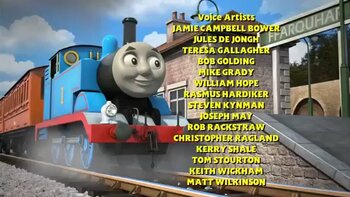
- Thomas & Friends, from seasons 13 to 22, had the actors credited, but never stated whom exactly voiced which character (Seasons 1 to 12 had the narrator voice all the characters so those seasons don't count). Eventually, both of Thomas's voice actors stated in interviews which characters they exactly voice. The 2014 special Tale of the Brave did try to fix this by crediting the actors, but there were still a few hiccups. For the final two seasons, 23 and 24, the actors were properly credited to their characters.
- Timothy Goes to School only credited the voice actors for the main characters (i.e. the kids, Mrs. Jenkins, and Henry) and didn't credit anybody else.
- Total Drama: All of its seasons credited its voice actors without specifying who played who. The Ridonculous Race and Total DramaRama do the same thing.
- Adventures of Sonic the Hedgehog and the first season of Sonic the Hedgehog (SatAM) only credit Jaleel White as Sonic, with the rest of the cast not having their characters identified. The second season of SatAM still gives White special billing, but also gives credit to the other major character roles. Both shows also separate the main cast from the Additional Voices credits, despite the lack of concrete character listing.
- Sonic Boom credits the main cast properly, but everyone else's voice actors (even those of recurring characters) are credited as a block of names under Additional Voices, with the exception of co-executive producer Bill Freiberger, who gets an And Starring credit for voicing Comedy Chimp and Lady Walrus.
- Team Umizoomi only credited the voice actors for Milli, Geo, and Bot, with all the other voice actors lumped under a list of "Additional Voice Talent" without saying who voiced who, and the live-action actors are not credited at all.
- Toonsylvania credits the voice actors, but does not specify which characters they voice.
- The credits of Welcome to Tonka Town list the voice actors (which include such names as Cathy Weseluck and Scott McNeil), but don't say who voiced what character.
- The 4Kids and early Atlas Oceanic version of Winx Club only lists the actors' names.
- Wolfboy and the Everything Factory credits the voice actors, but doesn't say what characters they play.
- The end credits of every episode in Wolverine and the X-Men (2009) credits the voice actors but doesn't specify who voiced which characters.
- WordWorld does list the names of all of the voice actors, but doesn't specify which characters they voiced.
- The 1948 Max Fleischer adaptation of Rudolph the Red-Nosed Reindeer only credited Paul Wing as the short's narrator. The voice actors for Santa Claus, Rudolph, and the other reindeer remain unknown to this day.
- The Adventures of Teddy Ruxpin only lists the names of the actors.
- Like most other British animated shows, the British/Pan-European The Animals of Farthing Wood only lists the names of the actors involved, with none of their character roles listed there. It also does not help that due to this and the lack of an public cast sheet, Behind The Voice Actors does not have a section for the show at all. Meanwhile, the American VHS release of Journey Home: The Animals of Farthing Wood properly credited Ralph Macchio as Fox, but the other actors are listed at the very end, including Fiona Reid (who voiced Weasel and Adder here).
- 12 oz. Mouse lists the names of the voice actors, but not their roles.
- Zigzagged in the case of Totally Spies!. The first episode credited the voice actors and their characters, but later listed only the actors and not the characters they played. Likewise, only seasons 1 and 3 actually credited guest voices, with all the other seasons only crediting the four main English language voices and no one else.
- The first six episodes of VeggieTales only listed the voice actors' names. Very Silly Songs! doesn't credit the voice actors at all.
- Voltron: Legendary Defender credited the characters in their roles during the first two seasons, but starting with the third season, the series only lists the actors' names.
- Noah's Island only listed the names of the actors involved without specifiying who they voiced.
- Italian dubs of Cartoon Network shows usually list only a handful of main characters, but some shows need some extra tidbits:
- Adventure Time: Only Finn, Jake and Princess Bubblegum are credited. Starting from Season 5, Ice King is credited too.
- The Amazing World of Gumball: Credits only Gumball, Darwin, Anais, Nicole and Richard. Halfway through Season 3 the former two get new voices, but the credits weren't updated at all.
- Clarence (2014): For the first half of season 1 the only voice actors credited are the ones who do Clarence, Jeff, Sumo, Mary and Belson (and the last one is wrong: Belson is voiced by Davide Lepore, but the credits instead mention Emiliano Reggente, Chad's voice actor). Subverted starting from the second half of the season, where there is a gigantic list crediting the voices for every character in the show, even one-shot characters.
- We Bare Bears, Justice League Action, Supernoobs and Batwheels take it to the extreme and have no credits for the Italian voice actors.
- The Polish dub of The Country Mouse and the City Mouse Adventures listed only the voice actors for Emily and Alexander.
- The English dub of Felidae only lists the original German cast. For years, it was commonly believed that the film was dubbed by celebrity actors or American voice actors. However, in January 2019, the cast was revealed to be composed of London-based voice actors.
- The Great Music Caper (the English dub of the 2006 French film Piccolo, Saxo Et Cie) only lists Dizzy, Bop, and Dr. Hammer with their voice actors (Joanna Levesque, Bow Wow and Cheech Marin, respectively) — everyone else, including the narrator, are lumped into a "Additional Voices" list.
- The Japanese dub of The Grim Adventures of Billy & Mandy only credits the actors dubbing Grim, Billy and Mandy as other voice actors are just listed on the bottom with no proper credits.
- The Italian dub of Helluva Boss credits properly only the voice actors for Blitzo, Moxxie, Millie, Loona and Stolas, with everyone else being dumped into a "other voices" list.
- In the Filipino dub of The Loud House Movie, the characters' singing voices are credited, but it's not specified who did the singing for who.
- The Italian dub credits for Miraculous Ladybug feature the entire voice cast for the show, including the voices of multiple one-shot characters... the problem is that not only they don't say who voices who, but also the credits are written in a very small font and last for only 3 seconds.
- The Filipino dub of The Mitchells vs. the Machines credits Carl Simon Dela Cruz and Steve Dela Cruz as the voices of Eric and Deborahbot 5000, but it doesn't specify which is which, because they're both listed as "Robot".
- My Little Pony: Friendship Is Magic:
- The Italian dub of the show changed format multiple times for the credits. Season 1 listed only the Mane 6 plus Celestia, Spike, and Pinkie Pie's singing voice. In Season 2 it was changed with a ginormic list of almost every character appearing during the season (and until 2015 it was the only confirmation that the Flim Flam Brothers episode was indeed dubbed since it's skipped in TV airings), plus a general list of the singing voices missing the "who voices who" part. Season 3 did a similar thing, but listing only main and important characters (Mane 6, Spike, Princesses, Shining Armor, Discord, Big Mac, Apple Bloom, Sweetie Belle and Granny Smith - before you ask no, Scootaloo's voice was never credited on screen). Season 4 did something similar to Season 2, but only covered the first seven episodes (it can be explained because starting from Season 4 they stopped waiting for the complete season airing and instead they split each season in 3 waves that air within the current year), Season 5 came back to the Season 3 format, and Season 6 it's where they're finally making individual credits for each episode.
- The My Little Pony: Equestria Girls films usually have a full cast listing in the Italian dub. The only exception is My Little Pony: Equestria Girls – Rainbow Rocks, where not only the voice actors are listed without saying who voices who, but the Italian credits aren't even on screen: they're instead spoken over the movie's ending credits, covering a good chunk of the song that plays during them.
- Most non-English dubs of Once Upon a Studio credit only the voice actors for Mickey, Minnie and the characters voiced by Celebrity Voice Actorsnote , while everyone else is bundled in a list of "other voices".
- The English dub of the German animated film Pirates Of Tortuga Under The Black Flag only lists the original German voice actors.
- While the original English version of Ready Jet Go! properly credits each and every voice actor, in the Norwegian dub, only the voices for Jet, Sydney, Sean, and Face 9000 are credited. Everyone else is lumped under "Andre medvirkende" (Other Contributors) without saying who played who.
- The Italian dub of Transformers: War for Cybertron Trilogy credits only the voice actors for Optimus Prime, Megatron, Bumblebee and Elita-1 for Siege. Earthrise adds the voice actors for Wheeljack, Starscream and Deseeus, but Kingdom comes back to just the four charachers from the first season.
- The second Latin Spanish dub of VeggieTales normally credits the Spanish voice actors and who they voiced during the credits. However, Dave and the Giant Pickle, despite having localized credits, credits the original voice actors instead, and both Gideon: Tuba Warrior and Minnesota Cuke and the Search for Samson's Hairbrush simply leave the credits untranslated with no mention of the dubbing cast or staff.
- The Muppet movies:
- Inverted in The Muppet Movie, which has the puppeteers with their characters, but lists the "Special Guest Stars" without saying who they play.
- Zig-zagged by Follow That Bird: first it lists Caroll Spinney, Jim Henson and Frank Oz with their characters, but then Richard Hunt, Kathryn Mullen and Jerry Nelson are listed under the generic heading of "Principal Muppet Performers". All the other actors after this, both live-action and Muppeteers, are listed along with their characters.
- The Italian dub of The NeverEnding Story (1984) only credits the voice actors for Bastian, Atreyu and The Childlike Empress.
- The Muppets:
- Unlike the various movies, most of the TV shows credit the Muppet performers, but not the characters they portray. An exception to this rule is the short-lived The Jim Henson Hour.
- On Sesame Street, Caroll Spinney frequently received special credit for performing Big Bird and Oscar the Grouch, while the other performers would usually be listed under the category "Jim Henson's Muppets".
- The Untouchables is a rare Live Action example... and it's an Inversion at that: During the Opening Credits, the actors playing the principle characters of the episode are shown. However, when the cast list is read in the closing credits, the only one of them that is specifically paired with his character is Robert Stack (Elliot Ness). The co-stars and special guest stars are listed but their characters are not named in the credits, even though they were the principles; being standard text credits, the pictures are not shown either. This is followed by the listing of the rest of the episode's actors paired with their characters, first the Recurring Characters then the one-shots.
- The US dub of Tots TV doesn't credit any of the cast members.
- Van-Pires credited Van He'llsing as playing himself, this making identification of the true name of his actor difficult — some guessed it was Gary Oldman playing him, others say it wasn't — the latter being confirmed through an interview with Axle's actor. The voice actors for the Van-Pires play this straight, with only Trackula (Jonathan Davis) and Ambula (Donna Daley) having been identified after the show's end.
- The names of the actors in the Magic Bullet ads are unknown.
- The French dub of Goosebumps (1995) doesn't credit the French voice actors.
- The Québécois French dubs of some of the Barney & Friends videos don't credit the French voice actors.
- The Noddy Shop uses the "names of the actors only" variant for both its' cast and the puppet voices, and these credits happen during the opening titles. However, only one actress (Jayne Eastwood as Aunt Agatha) appears with the name of her character. The ending credits do the same thing with the voices for the Noddy's Toyland Adventures segments. In addition, the Non-Singing Voice roles aren't credited.
- Between the Lions: The show's ending credits lists the voice actors and puppeteers' names but not saying who played which character. This also happened on an older webpage on the PBS Kids website.
- The Fresh Beat Band didn't credit any guest actors for its first two seasons (other than Melody, Reed, and Ms. Piccolo's portrayers). Averted in the third season.
- Donkey Hodie lists the puppeteers without saying who played which character.