

The Top Brass
Dr. Ishirō Serizawa
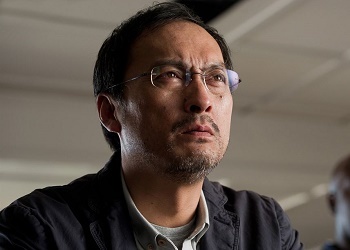
Portrayed By: Ken Watanabe
Appears In: Godzilla | Godzilla Awakening | Godzilla Aftershock | Godzilla: King of the Monsters | Godzilla x Kong: The New Empirenote
Monarch's leading scientist and a leading expert on the Titans. He has a deep reverence for Godzilla in particular, viewing him as a guardian who exists to restore balance to nature rather than disrupt it. He's the son of Monarch founding member Eiji, and the father of Ren.
- Adaptation Name Change: His first name is spelled Ishirō in most sources, but it's misspelled as Ichiro in the Godzilla vs. Kong novelization.
- Adaptational Goal Change: He differs from the original Dr. Daisuke Serizawa in Godzilla (1954), in that Daisuke built a new bomb to destroy Godzilla in order to save humanity; whereas Ishirō is a naturalist who advocates for keeping Godzilla alive due to the latter's Adaptational Heroism, ultimately detonating a bomb to heal Godzilla in Godzilla: King of the Monsters (2019).
- Age Lift: The 2014 movie's novelization makes him younger than in the movies: the 2014 novel describes him as being in his forties in 2014 when canonically he would've been at the end of his 60s at this time.
- Asian and Nerdy: Naturally, being an American Godzilla movie's adaptation of Daisuke Serizawa in name. On top of being an egghead like most Monarch scientists, he's one of the most keenly aware of Godzilla's role in nature.
- Batman Grabs a Gun: Implied. In his first movie appearance, he deeply protested to the usage of nuclear weaponry against Godzilla and the MUTOs, mostly on logical grounds, but also partly because his father was a survivor of the Hiroshima bomb (as was he in his infanthood according to the Canon Discontinuity graphic novel Godzilla: Awakening). But in King of the Monsters, when King Ghidorah is reigning over the other Titans and destroying the entire world, Serizawa subsequently has no objections to being part of a plan which involves throwing a nuclear warhead at a crippled Godzilla in an effort to heal him rather than kill him, so that he can take out Ghidorah. Serizawa even manually detonates the nuclear warhead himself after complications with deploying it arise.
- Breaking Old Trends: This incarnation breaks a few of Daisuke Serizawa's in the original movie, surprisingly enough. The original Dr. Serizawa sacrificed both his life and life’s work to see Godzilla dead, while this Serizawa instead sacrifices himself to save Godzilla. The original Serizawa was horrified by the results of his research (the Oxygen Destroyer), and ultimately decided to take it with him to his grave, while this Serizawa ultimately passes his research on to ensure that his work continues.
- The Cassandra: He seems to be entirely right that Godzilla exists to restore natural balance when other Titans (or possibly humanity) disrupt it, yet in all his appearances before his death, his claims about Godzilla are dismissed by Admiral Stenz, the U.N. Security Council or the U.N. Senate, with catastrophic consequences or risk thereof. Even after Serizawa's death and the events of Godzilla: King of the Monsters made the world start seeing Godzilla as a hero, as shown in Godzilla vs. Kong, humanity is still almost ridiculously quick to turn on Godzilla and assume he's made a Face–Heel Turn.
- Category Traitor: In the Godzilla vs. Kong novelization, his son Ren views him as a traitor to humanity who cared more about Godzilla than about human life because of his Parental Neglect towards Ren and his "let them fight" stance.
- The Champion: He virtually worships Godzilla – scientifically seeing him as a global keystone species and non-scientifically seeing him as a guardian sent by nature to restore order – and he tries to support Godzilla from the human side and circumvent mankind from attacking him. In the first Monsterverse movie, Serizawa protests the plan to nuke the kaiju in favor of suggesting they stand back and let Godzilla kill the MUTOs for humanity, hoping that Godzilla will then leave mankind in peace (which he does). In Godzilla: Aftershock, he protests against the U.N. Security Council's insensate decision to let Jinshin-Mushi kill Godzilla, which will ultimately flood a Godzilla-free world with a MUTO horde. In Godzilla: King of the Monsters, Serizawa insists despite the U.S. Senate's derision that humans coexisting with Godzilla, in particular, is key to mankind's survival amidst the Titans, he protests when the U.S. military intervenes in Rodan and Ghidorah's battle instead of waiting for Godzilla to do his thing, and he finally gives his own life to save Godzilla's. The Godzilla vs. Kong novelization reveals that Godzilla has memorized Serizawa with honor for this last act after he had an up-close view of it.
- Composite Character: He shares his the surname and world-weariness with Daisuke Serizawa, who is also a paleontologist that wants to study the monsters versus killing them like Dr. Kyohei Yamane.
- The Cuckoolander Was Right: In the first film, it's easy to be sceptical of his claims that Godzilla is a guardian who exists to restore balance to nature and is on humanity's side so long as they don't make themselves a major threat to the natural order. Serizawa's beliefs are ultimately vindicated in King of the Monsters, where Godzilla is at his most heroic in his, Mothra's and humanity's fight to take their planet back from King Ghidorah, and where Godzilla commands the Earth Titans to revitalize the Earth's ecology and stay away from human population centres following Ghidorah's death.
- Death by Irony: A heroic case. He's very mindful of nuclear weapon usage, partly because he (a baby at the time) and his father are survivors of the Hiroshima atomic bombing, and he opposes Admiral Stenz's decision to try nuking Godzilla and the MUTOs in the first movie. In King of the Monsters, Serizawa sacrifices his life manually detonating a nuke in front of Godzilla to save the latter's life. There's another angle to this too: Serizawa tends to advocate in favor of leaving all the heavy work of neutralizing the truly-dangerous Titans up to Godzilla with minimal human interference, but after the military's blunder with the Oxygen Destroyer leaves the world completely under threat of King Ghidorah eradicating humanity and permanently destroying the natural order with Godzilla crippled, Serizawa is forced to go against his former advice by intervening to revive Godzilla so the latter can stop Ghidorah's apocalypse before it's too late for life on Earth. The irony is not lost on him."Sometimes, the only way to heal our wounds is to make peace with the demons who created them."
- Decomposite Character: Unlike the original Dr. Serizawa, this one didn't invent the Oxygen Destroyer.
- Determinator: Serizawa ventures into Godzilla's highly irradiated and magmatic chamber to revive him. Such conditions would be both exhausting and fatal for a younger, fitter man, but Serizawa finds the strength to carry on.
- Dies Differently in Adaptation: Sort of. While he stills dies in a Heroic Sacrifice that involves Godzilla, here, he died helping Godzilla recover from the Oxygen Destroyer, whereas the original Serizawa died killing Godzilla with it.
- Elite School Means Elite Brain: He's the world's leading expert on Godzilla before his passing, and in 2019 he's the de facto leader of Monarch's top minds. His Monarch Sciences bio says that he attended the University of Tokyo, which is a Top Type university and is one of Japan's best if not its single best.
- Everyone Has Standards: Despite his worshipful attitude towards Godzilla, and by extension the other Titans, and even though he disagrees with the government's plan to kill the Titans, he still feels that reintroducing them to the modern world should be done carefully under strictly controlled measures, to minimize the danger this would pose to humanity. He's well aware that the Titans are a largely unknown entity beyond humanity's ability to control. As such, he's horrified by Dr. Emma Russell's decision to deliberately awaken all of the Titans and let them wipe out most of humanity, especially as it was only after Monster Zero was released that anyone knew it was actually an invasive species.
- Expositing the Masquerade: In the 2014 movie, he and Dr. Graham provide Ford Brody with a succinct rundown on Godzilla, the MUTOs, and Monarch's existence after Ford witnesses the male MUTO's containment breach at Janjira.
- Facepalm: Look closely in King of the Monsters when Emma is explaining her extreme plan, and you can see Serizawa put his face in his hand in dismay as he realizes just how much Emma has taken the pro-Titan philosophy which they originally connected over to a truly amoral extreme which could create a recipe for global disaster.
- Foil:
- To Joe Brody, which is lampshaded when Serizawa gives him a sympathetic stare through the two-way mirror upon hearing of his wife's death. They both are (were in Joe's case) Reasonable Authority Figures in charge, set on their current path partly because of a nuclear tragedy of some kind in which their loved one was caught up (for Serizawa it's his father's firsthand experience of the Hiroshima bombing, for Joe it's the Janjira meltdown which caused his wife's death). They're also both brilliant men, who happen to be regarded by peers (his son Ford for Joe, Admiral Stenz for Serizawa) as Cloudcuckoolanders but in the end are both proven to be right; Serizawa's expertise is in what the Kaiju's emergence means and their role in nature, whereas Joe's is in the effects of their powers and how to detect them. However, whereas Serizawa actively tries to maintain the Masquerade, Brody seeks to Break the Masquerade (or at least the cover-up in Janjira specifically); Serizawa was responsible for defending and building up Monarch as a key figurehead, whereas Joe becomes a lonely recluse taking teaching jobs after the nuclear plant's destruction; Serizawa is The Stoic whereas Joe is driven by Mangst to uncover the truth. Interestingly, Joe is estranged from his son and it's hinted Serizawa likewise isn't necessarily close to his sonnote ; but Serizawa has a Number Two who's Like a Daughter to Me, and Ford and Joe briefly team-up during the film; Ford outlives his son, while Serizawa outlives Vivienne Graham by a short time.
- To Admiral William Stenz, whom he holds a mutual respect for. One is Japanese and the other American and they have a talk about the Hiroshima bombing at one point. One is a scientist and the other a military man. They're also both quite lean and elderly, and both are The Stoic. In both their film appearances, Stenz is reasonable but usually advocates killing the Titans, whereas Serizawa has Wide-Eyed Idealist shades and admires the Titans — guess who makes things worse and who proves to be right. Serizawa is focused on the balance of nature, while Stenz is more focused on human lives. Stenz advocates human intervention in Titan crises whereas Serizawa's iconic Wham Line summarizes his stance.
- To Dr. Emma Russell in the second film. They're both high-profile Monarch scientists who believe in the fundamental goodness and ecological importance of the Titans, and they consider them the true rulers of the Earth whilst human civilization just lives in a self-made bubble in the Titans' long absence. However, whereas Serizawa still cares about human life (in his own words, he admires all forms of life) and calls out Emma for risking billions of lives, Emma has grown misanthropic and is fine with sacrificing millions to allow the Titans to retake the world. Serizawa advocates humans standing by and allowing Godzilla to restore balance when hostile Titans disrupt it, and believes things will work out in the end according to this philosophy; whereas Emma actively fears humanity euthanizing the sleeping Titans and screwing their planet's chance at regaining harmony, and she responds to this by seeking to actively wake all the Titans up and she assumes nothing will go off-script — Emma and Serizawa actually both call each other out on their respective reasonings when Emma is explaining her motives. Interestingly, they were also both present at the destruction of a city (Hiroshima for Serizawa, San Francisco for Emma) which showed the full destructive capability of humans and Titans respectively, and which led to their family's estrangement, and it's fair to say that both of them don't hold it against the force which caused the destruction.
- He's also one to Dr. Mark Russell in King of the Monsters, particularly after Vivienne Graham's death, and this gets lampshaded in the novelization. Both of them are Monarch or ex-Monarch scientists with a keen fascination and empathy for the Titans, and both of them firmly recognize that humans shouldn't try to subjugate nature because they're most likely to get anything but the desired result (and both of them learned this due to some kind of tragedy — for Serizawa it was his father's experience in the Hiroshima bombing and/or the Janjira containment breach, for Mark it was a tragic incident where the prototype ORCA caused whales to beach themselves to death). The difference between them is that Mark let himself become consumed by his own grief and allowed it to fester after Andrew's death, whereas Serizawa deliberately avoids falling into the same trap as Mark when he's grief-stricken by the death of Graham, who had a surrogate father-daughter relationship with him. Adding irony to the contrast is that Andrew Russell's death by Godzilla was accidental collateral on Godzilla's part, whereas Ghidorah deliberately murdered Dr. Graham in an act of malice.
- And he has an Evil Counterpart in Alan Jonah, although they never meet. They're both de facto leaders of their respective organisations associated with finding the Titans, both of them are lean and elderly men, and both characters view the Titans as superior beings to humans and more than mere monsters. Interestingly, they also both see their surrogate son/daughter being killed in King of the Monsters, and both of them have a younger female accomplice by their side whom they ultimately outlive during the second film; but whereas Serizawa forces himself to shoulder on in the aftermath of his personal loss, Jonah crosses the Despair Event Horizon due to his lossnote . Serizawa champions non-interventionism, believes that humans and Titans can co-exist together, and still cares about human lives (he states in the movie that he admires all life); whereas Jonah is actively trying to forcibly awaken all the Titans, and is perfectly fine with letting Ghidorah wipe out humanity, even if the three-headed monster also destroys the rest of the world. While Serizawa champions Godzilla as the king/alpha, Alan champions King Ghidorah.
- He also turns out to be this to his estranged son Ren Serizawa. Ishiro and Ren are both major figures in their respective organizations that dealt with Titans and have a mutual interest in Godzilla in particular. The similarities end there, however, as while Ishiro has nothing but respect for the Titans and holds Godzilla in reverence and eventually gives up his life to save him, Ren has nothing but contempt for the monsters and would rather see them all eliminated, Godzilla especially. Also, unlike his father who dies a heroic death to save the last hope for humanity, Ren is killed off very unceremoniously while piloting MechaGodzilla after Ghidorah's subconsciousness takes over and electrocutes him to death, almost dooming humanity to destruction.
- The Ghost: He's been mentioned a total of once in Monarch: Legacy of Monsters, but doesn't show up at any point.
- Godzilla Threshold:
- In the 2014 movie, after he learns that the MUTO cocoon is producing EMP pulses that threaten humanity on an infrastructural level and that the creature is about to hatch, Serizawa reluctantly and morosely gives the order to kill the creature in its cocoon (not that Monarch's kill switch makes any difference in the end). Dr. Graham's reaction when Serizawa gives the order and Serizawa's own hesitation makes it clear that this isn't a light decision on their part at all.
- Serizawa is normally against nuclear weaponry due to his criticism of mankind's arrogance and his family's firsthand experience of the Hiroshima bombing, and he generally believes that putting faith in Godzilla to restore natural balance is the best route mankind can take when hostile titans surface. However, in King of the Monsters, the threat posed by King Ghidorah to all of humanity and potentially all life on Earth' is so great, and the consequences of the Oxygen Destroyer's disastrous usage so severe, Serizawa goes against both his aforementioned former stances by intervening with a manually-detonated nuke in order to accelerate Godzilla's healing so that he can stop Ghidorah's rampage.
- Good Is Impotent: Despite his superficial air of wisdom and the respect he commanded from his peers, it's implied that his brand of leadership, not least the way he implements his "leave nature alone and trust it to sort itself out" philosophy into it, is a big part of why Monarch is so useless at being proactive to Titan threats and is solely reactive. Both Emma Russell and Lee Shaw respectively call Serizawa out on this after how he handled the Titan crisis of G-Day and after he subsequently failed to prevent Monarch from ending up on the brink of being shut down by the government, and in the Godzilla vs. Kong novelization, Mark Russell (who's just as if not even more impotent than Serizawa at leading Monarch during Godzilla's rampage against Apex) thinks to himself that Serizawa made very questionable decisions which were posthumously overshadowed because of his Heroic Sacrifice.
- Hair-Contrast Duo: He forms an inversion with the much lighter-haired Admiral Stenz in Godzilla (2014), while they're working together or tracking the Kaiju and are debating the military's use of nuclear weaponry. Serizawa is by far the more idealistic and philosophical of the duo with his borderline-esoteric conviction in Godzilla's more benign purpose, he reveres nature, and he believes that human intervention does more harm than good compared to letting nature sort itself out. Stenz, on the other hand, is committed to protecting the public from the Kaiju first to the point of short-sightedness, is down-to-earth to a fault if out of his depth, is sceptical of the idea that Godzilla is anything more than another destructive beast that threatens the lives Stenz is charged with defending, and disgust at the idea of doing nothing is one of the reasons why Stenz initially authorizes the Nuke 'Em plan over Serizawa's objections. The two men have a moment where they talk and empathize over their respective countries' history with each other at the end of World War II and (in the novelization) their respective fathers' contrasting roles in the Little Boy atomic bomb's history.
- Hauled Before a Senate Subcommittee: In King of the Monsters he's summoned to a Senate meeting on the issue of the Titans alongside Graham and Stenz. He speaks in defence of the sleeping Titans to an evidently less-than-sympathetic senator. Ultimately, Serizawa and Graham walk out before the hearing is adjourned when they get an important phone call about Jonah's raid and kidnapping of Emma and Madison, angering the lead senator in the process.
- Held Gaze: Serizawa has such a moment with Godzilla, right as one dies while the other is healed.
- Heroes' Frontier Step: Upon learning that the EMP-generating male MUTO's cocoon in the ruins of Janjira is about to hatch into its adult form and likely endanger millions of people, Serizawa, despite his own scientific and naturalistic awe for the creature, gives the order for it to be killed in its cocoon in an attempt to stop it. The kill attempt fails, but points for trying.
- Heroic BSoD: It's subtly implied he slips into one when Godzilla is seemingly killed by the Oxygen Destroyer: he slumps into a chair just after the news hits, and he doesn't contribute much to Mark and the Monarch brass's arguments about King Ghidorah's reign of terror except to grimly state nothing on Earth can stop Ghidorah with Godzilla out of action. From Serizawa's P.O.V., at this point he's lost both his beloved protégé and the creature which he and his father worshipped as the god of natural balance in short order. Serizawa comes out of his funk as soon as Mothra's arrival makes Monarch and the military aware that Godzilla is still alive and therefore not all hope is lost.
- Heroic Lineage: The tie-in prequel graphic novel Godzilla: Awakening (which is now non-canon to the wider MonsterVerse) states that his father did not die in Hiroshima: they both survived the bombing, and Serizawa's father joined Monarch as a founding member, developing a fixation on finding and tracking Godzilla. Ishirō followed in his father's footsteps when he died. Unfortunately, his son Ren had other ideas.
- Heroic Sacrifice: Type 2. When Godzilla is heavily wounded and in a healing sleep in his "throne room" in the Hollow Earth, an area filled with radioactive lava and thusly too hot and irradiated for any human or machine to survive entering, Dr. Serizawa volunteers himself to bring a nuclear warhead to Godzilla and manually detonate it, giving his life to accelerate Godzilla's healing so the latter can save the world from King Ghidorah. This decision is especially notable because Serizawa is a survivor of Little Boy's detonation over Hiroshima, and so is well aware of what he is getting into.
- Humble Hero: According to his Monarch Sciences bio, he's only the de facto spearhead of Monarch because, despite everyone's admiration of him and the world governments looking to him, he refuses to carry an official title; believing that "to maintain a balance between mankind and Titans, we must first maintain an equal balance of self".
- Hypocrite: Emma calls him out on how he has the nerve to make a big deal about her global eco-terrorist plan to manipulate the Titans and risk billions of lives for the greater good, when he's been irresponsibly treating The Government's contrasting and law-abiding but similarly risky and dangerous plan (which he disagrees with just as much as he disagrees with Emma) like it's a harmless joke that won't also endanger billions of lives if it goes through.
- Hypocrite Has a Point: In King of the Monsters, despite Emma's Hypocrisy Callout of him for lambasting her plan's mass endangerment of humanity when he himself wasn't reacting seriously to the threat of the government's own plan (prompted by Monarch's failings under Serizawa's own leadership) leading to another apocalyptic backfire, the movie proves Serizawa is completely right that Emma is in way over her head and that the whole world could end up paying for her hubris.
- The Idealist: He's critical of mankind's arrogance and hubris, he knows better than most humans in the setting just how helpless humanity is in the face of nature's raw power in the form of the Titans, and he and his father were survivors of the Hiroshima bombing. Yet despite all of this, he firmly believes that Godzilla is mankind's protector rather than our destroyer and that humanity and Titans can coexist with Godzilla's aid whilst restoring balance to nature. Godzilla's actions across the movies and the post-movie news snippets in the King of the Monsters Creative Closing Credits have served to vindicate Serizawa's beliefs.
- Ignored Expert: He's a leading expert on the Titans including Godzilla, but this doesn't stop the government and military from ignoring or brushing off his warnings, not least due to their contempt for the idea that Godzilla is anything other than a dangerous beast of mass destruction.
- In the 2014 movie; when Serizawa advises Stenz and the military that they should let Godzilla neutralize the MUTOs for them instead of trying to nuke all three creatures, his suggestion is dismissed – though to be fair to Stenz, Serizawa's suggestion was based more around naturalism than his scientific field, and the way Serizawa worded it didn't do him any favors. Regardless, it's the military following their own plan that causes things to go From Bad to Worse towards the end of the movie when the MUTOs steal the armed nuke for themselves in the middle of downtown San Francisco, and it's heavily implied that even if the nuke hadn't been stolen, the nuclear detonation against Godzilla and the MUTOs would have made a bad situation much worse.
- In Godzilla: Aftershock, he protests the U.N. Security Council's decision to stand by and allow Jinshin-Mushi to lure Godzilla into a fight he can't win, warning them that Godzilla's death means humanity will be practically defenceless against future Titan attacks (nevermind the other blatant problem with the Security Council's plan that the Council are obscenely ignoring), but the Council make it clear they couldn't care less for the idea that Godzilla is a protector while using Serizawa's own Wham Line against him.
- At the start of King of the Monsters, Serizawa is trying to convince the U.S. Senate that exterminating (or rather trying to exterminate) the Titans would be a grave mistake for humanity, but Senator Williams is hardly listening and is contemptuous of Serizawa's admiration of the creatures. Later in the movie, the government and military don't even bother to tell Serizawa in advance about what they're doing, let alone get his advice, before they fire the Oxygen Destroyer towards the loosed Ghidorah and Rodan, which has truly apocalyptic consequences.
- Irony: Daisuke Serizawa ventured to the bottom of the ocean to kill Godzilla with his weapon of mass destruction, the Oxygen Destroyer. Ishirō ventured to the bottom of the ocean to save Godzilla with a weapon of mass destruction, a nuclear bomb. What's more, a nuclear bomb destroyed his hometown of Hiroshima, yet Serizawa uses one to revive Godzilla.
- It's Personal: Defied by him in the King of the Monsters novelization. After Ghidorah kills someone he cared about in full view of him, Serizawa refuses to harbor hatred towards Ghidorah and is wary to cast potentially-biased judgments, because he's already seen what a sad, spiteful shell of a man Mark has turned into as a result of falling into the same trap (which is made all the more ironic by the fact Ghidorah intentionally murdered Serizawa's friend in malice whilst Godzilla was practically only guilty by association of Mark's son's death).
- Last-Name Basis: He's just about exclusively referred to by his last name over his first, even by Monarch operatives who are implied to have been close to him such as Graham, Stanton and Chen.
- Last Request: His very last words to Mark Russell at the end of their last goodbye are telling him to take care of the rest of the team, before Serizawa departs via mini-sub to sacrifice himself.
- The Leader: By the time of King of the Monsters, Serizawa is the spearhead and leader of Monarch. It's Serizawa whom Mark Russell advises about how to deal with an imminent Titan, it's Serizawa who issues orders to the other top brass, and it's Serizawa who puts the other branches of Monarch on high alert.
- Like Father, Like Son: The non-canon Godzilla: Awakening states that his father Eiji's personality was practically a spitting image of the man Ishirō grew into after his father's death: intelligent, compassionate, haunted by the Hiroshima bomb and consequently concerned about and opposed to the usage of nuclear weaponry, highly fascinated by and reverent of Godzilla after spending years studying him, and recognizing Godzilla as a creature that can destroy the truly civilization-threatening monsters for humanity. Averted hard with Ishirō's own son Ren, who is the antagonistic Black Sheep of the Serizawa linage and is literally just about everything his father opposed.
- Like Father, Unlike Son: Whilst Ishirō followed in his father Eiji's footsteps, Ishirō's own son Ren, on the other hand, ends up being as different from his father as night and day. Ishirō was a dedicated naturalist who was very conscious of mankind's arrogance and the damage we've inflicted on nature, yet he still cared passionately for human life; he revered the Titans, he believed that mankind finding ways to coexist with the creatures was key to the survival of the world as we know it, and he all but worshipped Godzilla in particular as the guardian of nature. Ren, who was disillusioned with his father for neglecting him, was a hi tech-oriented Evil Genius who saw humanity as the supreme force on Earth and the true apex of evolution, he was blinded by hubris to the point of hooking Ghidorah's undead neural remains up to a Humongous Mecha and dabbling with Green Rocks; he had no compunctions against endangering and indirectly massacring millions of people for his own agenda, saw the Titans as nothing more than dangerous animals meant to be mastered by humanity in the name of ongoing progress, and he personally despised Godzilla with a burning passion whilst seeking to kill the latter above all else.
- Loved I Not Honor More: In the Godzilla vs. Kong novelization, it's confirmed that he rarely saw his wife (Ren's mother) due to his commitment to his Monarch work coming first. Apparently, he didn't know she'd died while he was away on field work until a week afterwards. He simply told Ren upon coming home from an expedition two days too late for the funeral, "She understood."
- Mangst: Despite his stoic demeanor, in the 2014 movie he looks visibly shell-shocked with a Thousand-Yard Stare when observing his dead colleagues' bodies after the male MUTO's escape, and he subtly hints through his father's pocket watch that he's still haunted by the Hiroshima bombing which he and Eiji survived when Ishirō was a baby. In King of the Monsters, he's shown solemnly and openly mourning the death of Dr. Graham for what is implied to be several hours before pulling himself together to focus on stopping the eco-terrorists, and later he's quietly all but crushed at Godzilla's seeming death by the Oxygen Destroyer.
- Married to the Job: The Godzilla: King of the Monsters novelization states that he understood and appreciated Vivienne Graham's prioritization of commitment to their Monarch work over romance in her personal life. The Godzilla vs. Kong novelization furthermore makes it clear that Serizawa prioritized his Monarch work over spending time with his family, and was often away for weeks at a time pursuing it, being held up for weeks when his actual wife died while he was away on an expedition. By the time Serizawa is able to get up close to Godzilla, his life is over.
- Missing Mom: Practically nothing is known about Serizawa's mother. In the prequel graphic novel Godzilla: Awakening, Serizawa (then a baby) was in a different part of town to his father when Little Boy fell on Hiroshima, all that's mentioned of his mother is that Eiji thought of her and Ishirō just after the blast, and Eiji turned to Ishirō's grandparents to take care of him later on; indicating that Serizawa's mother wasn't in his and his father's life at the time or died in the bombing.
- Mr. Exposition: Much of his dialogue is devoted to providing backstory and information about Godzilla and other Titans in both his movie appearances.
- Mythology Gag: In the original 1954 Godzilla film, Dr. Serizawa sets off the Oxygen Destroyer to kill Godzilla and allows himself to die alongside him. In King of the Monsters, Serizawa dies in the process of reviving Godzilla, who is weakened from the Oxygen Destroyer.
- Newspaper Backstory: A newspaper clipping on Joe Brody's wall in Godzilla (2014) reveals Serizawa's involvement in the Janjira cover-up, before he's shown in a later scene at the containment site.
- Not So Stoic: Despite his stoicism, there have been a couple of instances where something pushed him too far. In addition to showing mangst, he has a Thousand-Yard Stare response to the aftermath of Hokmuto's devastating escape in the first film, and in King of the Monsters, he's clearly distraught after Dr. Graham's death (falling to his knees and later being shown silently mourning her).
- Nuclear Weapons Taboo: In the 2014 movie, he's firmly against the military's plan to try getting rid of the Kaiju by nuking them, partly because he recognizes that the nuke likely won't do anything to kill the Kaiju but will instead make the problem even worse, and partly because him and his father were survivors of Hiroshima.
- Oh, Crap!: Serizawa has two standout moments. The first is when he, Graham and Stenz realize the female MUTO has awakened in the first film. The second being when the ORCA awakens Ghidorah.
- Older Than He Looks: He doesn't look older than a man in his 40s or mid 50snote , even though his backstory of having been a baby when the bomb fell on Hiroshima places him in his early 70s (68 at the very least during the 2014 movie).
- Papa Wolf: Mentally discussed by him in the King of the Monsters novelization, when he suspects he would've done the same thing as Mark (charging in and grabbing a gun in a Leeroy Jenkins move) if he was in Mark's position with Ren held hostage amidst the Antarctica gunfight.
- Parental Neglect: The Godzilla vs. Kong novelization reveals Ishirō's parenting style with Ren was similar to the one his own father took with him – sacrificing a LOT of family time to commit himself to his work for Monarch – but it backfired in Ren's case. Ren's P.O.V. in the novel indicates Serizawa barely acknowledged Ren when they were in the same room, and it reveals the rift between father and son got particularly wide after Ren's mother died while Serizawa was away on fieldwork, only returning home to his grieving son two days after the funeral (which Ren had to organize on his own) and not telling his son anything other than "she understood". Ultimately, this became Ren's Freudian Excuse after Serizawa's death caused Ren to fully snap, leading Ren to become a full-blown Evil Genius and an antithesis to everything Dr. Serizawa and Eiji had stood for.
- Parental Substitute: He has a very close relationship with Dr. Graham, and the latter's Monarch Sciences bio states she regards Serizawa as a father figure in the absence of her biological father.
- Pre-Sacrifice Final Goodbye: He gives one out during King of the Monsters. After volunteering himself to revive Godzilla with a manually-detonated nuke in a Heroic Sacrifice, Serizawa spends his final moments with Mark Russell and his present colleagues (Chen and Stanton) saying a solemn goodbye to each of them, before departing in a mini-submarine. Serizawa also gets to say goodbye to Godzilla himself when he gets close to the Big G's face and the Titan which Serizawa has devoted his life to clearly observes him.
- Reasonable Authority Figure: His Monarch Sciences bio states he's seen as Monarch's "tip of the spear", though he refuses to carry any official rank or title due to his desire to "maintain an equal balance of self" akin to the balance between man and Titans. In the 2014 movie, when Serizawa first sees Joe Brody being interrogated, at first he thinks the guy's a loon until he looks at the papers Joe has on him and notices the bio-acoustic patterns perfectly match the ones Monarch are seeing from the male MUTO's cocoon now – when the U.S. Navy pick Serizawa and Graham up following the male MUTO's escape, Serizawa has them also bring Joe along due to this. In King of the Monsters, Serizawa looks to Mark Russell and the key Monarch brass around him for information and advice. That having been said, it should be noted that unlike a standard RAS, Serizawa is prone to leaning towards idealism and ethics when it comes to Godzilla instead of being objective, even if Serizawa does turn out to be right about Godzilla in the end.
- Secret Legacy: Godzilla Awakening (which is non-canon to the MonsterVerse after the release of Monarch: Legacy of Monsters) states that Ishirō thought for a long time that his father Eiji worked for a cargo company, and it wasn't until he was a young man that Eiji told him the truth about Monarch and the Titans.
- So Proud of You: The second form. In the 2014 novelization, he tells Ford Brody before the latter departs with the HALO team to try and disarm the nuke in San Francisco that Ford's recently-deceased father would be proud of him.
- Spared by the Adaptation: Although not quite the same character, his original incarnation in the original Godzilla (1954) (Daisuke Serizawa) died preventing Godzilla from wreaking more havoc at the movie's end, whereas Ishirō Serizawa comes out at the 2014 movie's end with very few scrapes and bruises. Downplayed/subverted as of King of the Monsters when he sacrifices himself for reasons that parallel the original Serizawa.
- The Stoic: Slightly downplayed. He's mostly calm, soft-spoken and respectful, and he refuses to let grief or loss lastingly bog him down (as shown in King of the Monsters following Dr. Graham's death), but he still has quite a clear emotional range and shows clear sympathy towards others.
- Stoic Spectacles: He's a little older than most examples of this trope, but he has narrow, thin-rimmed spectacles and is quite a stoic and calm man. Subtly lampshaded in King of the Monsters, where Serizawa has his glasses off when he's mourning Dr. Graham's death and he promptly puts them back on once he recollects his resolve.
- Stopped Clock: In both his film appearances, he carries his father Eiji's pocket watch, which has remained stopped at 8:15 since it endured the Hiroshima bombing on that fateful morning in 1945. He reveals its history to Admiral Stenz in the 2014 film, and he looks at it one last time before he ironically detonates another nuclear bomb to save Godzilla, in King of the Monsters.
- Student–Master Team: His closest friend and confidante is Dr. Graham, who is three decades younger than him and whom supplementary materials reveal began as Serizawa's apprentice in Monarch before they gradually grew into scientific equals. The King of the Monsters novelization describes Graham as Serizawa's protégé.
- Summon Bigger Fish: Played straight in the second film, where his Heroic Sacrifice revives a near-dead Godzilla so the latter can fight and defeat the actively malevolent Ghidorah.
- Team Dad: His relationship with the other top brass in King of the Monsters has shades of this. He's the leader of Monarch to whom the rest of the (marginally younger) top brass unofficially defer, and he's distraught when Vivienne Graham is killed, with supplementary materials outright confirming Serizawa was a Parental Substitute to Graham. Stanton, Chen and Coleman are shaken by Serizawa's passing: for bonus points, it's hinted that part of the reason why Serizawa volunteered himself to make the Heroic Sacrifice was so that neither of his colleagues would have to lay down their own lives in his place.
- Thousand-Yard Stare: In the aftermath of the male MUTO's destructive escape and the deaths of most of his and Dr. Graham's colleagues at the Janjira site, Serizawa seems to have such a stare before Graham and Captain Hampton approach him.
- Tragic Keepsake:
- His pocket watch, which originally belonged to his father. It was broken in the Hiroshima bombing, and it's implied he never fixed it so it acts as a reminder of the event.
- In the King of the Monsters novelization, a pendant depicting Godzilla which he gave to Dr. Graham instead of Ren has returned to his hands for the short remainder of his life after Graham is killed by Ghidorah.
-
 Tuckerization: His first name is a tribute to Ishirō Honda, the director of the original Godzilla and the acknowledged creator of Godzilla. Though there was also a Dr. Serizawa in the original, his first name was "Daisuke".
 - Unplanned Manual Detonation: In King of the Monsters, he's forced to manually arm a nuclear warhead himself in order to revive Godzilla in a Heroic Sacrifice, after the weapons systems of the submarine Serizawa and Monarch were on was damaged.
- Upbringing Makes the Hero: He grew up in the immediate aftermath of the Hiroshima bombing, and he's consequently very cautious of humanity's hubris and destructive potential. According to Serizawa's Monarch Sciences bio, Eiji raised him to respect the relationship between man and nature from an early age.
- What the Hell, Hero?: When Godzilla is seemingly killed by the Oxygen Destroyer, which in turns leaves Ghidorah free to reign unopposed; Serizawa, who has been empathetic to Mark Russell's grief despite the latter's less-than-appreciative behavior for most of the movie; finally lets him have it in front of everyone for letting his fallacious rage towards Godzilla blind him:"Looks like you got your wish, Mark(!)"
- Wide-Eyed Idealist: Played With. While he's the only one who seems to understand that allowing Godzilla to take down other Titans might be a viable option, at least at first, he does so because of naturalistic philosophy. Worse, he continues to push for leaving it all to Godzilla, even as the humans disadvantaged him by feeding the MUTOs nukes, and doesn't abandon this philosophy in the sequel, even because Ford Brody turned the tide in his favor.
- The Xenophile: Besides greatly admiring the Titans, he has a quasi-religious attitude towards Godzilla, believing the latter is essentially the personification of the balance of nature and the only hope humanity has of neutralizing the MUTOs and Ghidorah, even if he has to be a Destructive Saviour to that end. Admiral Stenz understandably thinks of him as naïve for this.
Dr. Vivienne Graham
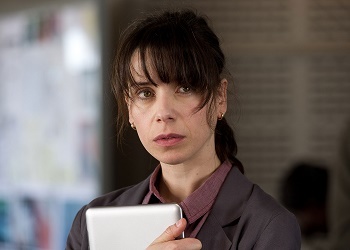
Portrayed By: Sally Hawkins
Appears In: Godzilla | Godzilla Aftershock | Godzilla: King of the Monsters | Godzilla x Kong: The New Empirenote
A senior paleozoologist, and Dr. Ishirō Serizawa's close protégé and assistant. She's also in charge of Monarch's top-secret containment site Outpost 32, monitoring the frozen, three-headed Alpha Titan Monster Zero.
- All There in the Manual: The movies largely make her out to be a Satellite Character with barely any independent personality, and much about her real personality and characterization is confined to supplementary materials (the movie novelizations, the Godzilla: Aftershock graphic novel, the Monarch Sciences website).
- Beware the Quiet Ones: Subtly implied in the 2014 movie. She's slightly more soft-spoken and timid-seeming than Serizawa, but if you look closely at her body language after Admiral Stenz silently sends her out of the room with a patronizing glare after the admiral has decided to try nuking the Kaiju, it looks like she's fuming with outrage.
- Brainy Brunette: A dark-haired top Monarch scientist with a somewhat petite physique and an Oxford PhD who is the protégé of Serizawa himself.
- Character Tics: She tends to hold one or both hands by her chin when she's excited or brooding.
- Death by Irony: As if a Xenophile getting killed by one of the Titans she's so fascinated by isn't enough of this trope on its own; supplementary materials reveal Dr. Graham was the Monarch operative placed in charge of Outpost 32 where Ghidorah, the Titan who kills her upon being freed, was contained. With how deliberate Ghidorah's middle head's attack on Graham was, one can be forgiven for thinking it's as if Ghidorah knew she was responsible for building the outpost around his prison and deliberately targeted her out of spite.
- Disappeared Dad: Her Monarch Sciences profile reveals her biological father died before she was born, and Serizawa is something of a Parental Substitute to her.
- Dropped a Bridge on Him: She returns in Godzilla: King of the Monsters alongside Serizawa as one of the main cast, then during the first 1/3 of the movie, she's devoured whole by Ichi (Ghidorah's middle head). Specifically, whilst Dr. Graham is running across the Antarctic ice amidst Godzilla and Ghidorah's first battle, her looking up and screaming is literally all the warning the audience gets before Ichi suddenly snaps his jaws shut around her, and the scene's dim lighting meant that some viewers didn't realize straight away that Sally Hawkins was the character Ghidorah just ate.
- Elite School Means Elite Brain: She's a Ms. Exposition who is considered Dr. Serizawa's equal (which is no small achievement), and her Monarch Sciences bio says that she attended the University of Oxford, which is ranked as one of the best universities in the world as well as one of the oldest that is still in operation.
- Expositing the Masquerade: In the 2014 movie, she and Dr. Serizawa give Ford Brody a summarized rundown on Monarch, Godzilla, and the MUTO after the bewildered lieutenant's first-hand experience of the male MUTO's containment breach at Janjira.
- Flat Character: The full extent of her personality on the big screen is that she's slightly timider and less stoic than Serizawa, and everything else about her is identical to Serizawa's own personality except without his compelling backstory of having been in the Hiroshima bombing. Supplementary materials however do more to rectify this and flesh Dr. Graham out more.
- Forgotten Fallen Friend: Downplayed in Godzilla: King of the Monsters – after she's killed by Ghidorah, in the next scene which is apparently set several hours later, Serizawa is shown visibly mourning her death in front of a monitor listing her newly-deceased status; but apart from that, neither Serizawa nor anyone else among the main cast ever mentions her again, which stands in contrast to Dr. Chen's "For Serizawa" line at the Final Battle. Averted altogether in the novelization of the movie, where Serizawa (for the short remainder of his life), Mark and Coleman all continue dwelling on Vivienne's death; and in the novelization of Godzilla vs. Kong, where Vivienne is mentally listed by Mark as one of three casualties of note alongside Serizawa and Emma Russell.
- Hauled Before a Senate Subcommittee: In the second film, she, Serizawa and Stenz are summoned to a Senate meeting, where the former two argue in defence of Monarch despite the lead senator's evident lack of sympathy. It ends with Graham and Serizawa walking out before the hearing is adjourned due to an important phone call. TV footage at the start of the film implies she's been attending these hearings for years following the events of 2014.
- Heroic Sacrifice: During the Antarctica battle, Dr. Graham stays behind in the downed Osprey to help Mark when the latter gets trapped under debris whilst everyone else is already evacuating. Though she saves Mark's life, fleeing the Osprey a while after everyone else leaves the two of them vulnerable to being noticed by Ghidorah, and Ichi promptly eats Graham alive.
- Heroes' Frontier Step: In King of the Monsters, when Godzilla and Ghidorah are battling around the grounded Osprey carrying the cast, Graham alone stays behind at personal risk to herself to rescue a pinned Mark from otherwise-certain death in the falling machine, while everyone else is already running for their lives outside. Unfortunately, this good deed plays a role in getting her noticed and eaten by Ghidorah.
- Honorary Aunt: The King of the Monsters novelization states she's regarded by Madison Russell as being almost an aunt figure, not least due to the stability she provided amidst Madison's parents' divorce. Poetically, Godzilla: Aftershock reveals she was also close to Emma before the latter's betrayal which ultimately gets Vivienne killed.
- Inconsistent Spelling: In Godzilla Aftershock, her name is misspelled as Vivian.
- It Was a Gift: A posthumous case. A scene in the King of the Monsters novelization reveals that one of her possessions in her room at Castle Bravo is a Yapese pendant depicting Godzilla, which Serizawa himself gifted to her.
- Jumped at the Call: Her Monarch Sciences profile indicates that when Serizawa first offered her a position in Monarch, Graham, being a lifelong dinosaur and fossil enthusiast, jumped at the chance to study living prehistoric creatures.
- Kids Love Dinosaurs: Her Monarch bio says that as a child, she slipped away during a school field trip at a museum to explore the fossils and artefacts for herself, and she wasn't found until the following evening, asleep at the foot of a Brontosaurus skeleton.
- Like a Daughter to Me: According to the Manual, this was the nature of her close relationship with Serizawa.
- Like Father, Like Daughter: Her passion for dinosaurs and paleobiology is a trait she shares with her deceased biological father.
- Married to the Job: According to the King of the Monsters novelization, none of her few romances have ever lasted because she's too committed to her Monarch work, a trait she bonded with Serizawa over.
- Ms. Exposition: Across her appearances, she provides a lot of exposition and information, from Expositing the Masquerade and expositing about the MUTOs in the 2014 movie, to expositing about the Phoenician tablets describing Jinshin-Mushi and Monarch's limited knowledge of the then-frozen Monster Zero.
- Nerd Glasses: Not in the movies, but in Godzilla Aftershock, she's shown to have a thin-rimmed pair of large, oval-shaped glasses.
- Nice Girl: Godzilla: King of the Monsters and its supplementary materials show that Graham was close friends to both Emma and Madison Russell, and she was also good at getting Mark to slightly open up. Serizawa meanwhile considers her the most compassionate person he ever knew. That being said, shots from both her movie appearances subtly show that while Graham isn't outspoken about it more than necessary, she doesn't think much of foolishness, such as when Admiral Stenz decides to nuke Godzilla and the MUTOs, or when she's forced to listen to Mark's ranting in the Castle Bravo briefing room.
- No One Gets Left Behind: In King of the Monsters, when the Monarch brass's Osprey is knocked into a crevasse and could topple inside at any moment, and with Godzilla and Ghidorah's catastrophic battle raging around them; Graham stays behind to free Mark of some debris that's pinning him down whilst everyone else is already running for their lives.
- Nuclear Weapons Taboo: She's appalled when Admiral Stenz and Captain Hampton are actually planning to try neutralizing the rampant Kaiju by nuking them, calling it crazy. She points out the creatures feed on radiation, and when one combines this with the fact the Bikini Atoll bombings failed to kill even one of the Kaiju, it's very understandable why Graham is so appalled the military would think trying to nuke three Kaiju at once is in any way a remotely good idea.
- Number Two: She's Dr. Serizawa's close assistant and protégé and one of the post-2014 Monarch top brass, who is almost always seen by her mentor's side.
- Sacrificial Lion: King of the Monsters director Mike Dougherty says she was killed off in the first 45 minutes of the movie with the intention of establishing Ghidorah's thoroughly evil nature in contrast to other antagonists.
- Satellite Character: In the movies, she largely just seems like an extension of Dr. Serizawa, with minimal personality or agency of her own on the big screen, and she's almost never seen without her mentor. Supplementary materials however largely avert this trope, doing more to flesh her out.
- Say My Name: In King of the Monsters, she screams Mark's name in distress when he's pinned by a collapsing section of ceiling in the downed Osprey.
- Shared Family Quirks: According to her Monarch Sciences bio, she inherited an attraction to "the wonders of nature at its most monstrous" from her disappeared dad who died before she was born.
- Student–Master Team: She's Dr. Serizawa's closest friend and confidante despite being three decades younger than him. Supplementary materials reveal she began her career in Monarch as Serizawa's apprentice, and they gradually grew into scientific equals. The King of the Monsters novelization describes her as Serizawa's protégé.
- Surprisingly Sudden Death: The only warning before Ghidorah chomps her is her looking up and screaming. She's eaten so quickly in a scene with such low visibility, some viewers didn't know right away that it was Sally Hawkins' character Ghidorah just ate, and they required the sight of Serizawa mourning in front of a monitor listing Vivienne as "Deceased" to clue them in.
- Sudden Sequel Death Syndrome: She's killed off less than a third of the way through the run time of the second movie she appears in.
- Swallowed Whole: Ghidorah's middle head snaps his jaws shut around her and eats her whole in Antarctica.
- Teeth-Clenched Teamwork: She doesn't seem to be happy about working with Admiral Stenz and the military once they start making stupid-ass decisions – she subtly appears to be fuming when Stenz silently tells her to clear the room with a patronizing glare after he settles on nuking the Kaiju, and after the nuke is stolen by the MUTOs, her body language in the background in her next scene indicates she's very dismayed at what's come of the military's folly which she and Serizawa advised against.
- This Cannot Be!: In the 2014 film, she reacts with disbelieving horror and says it's impossible the moment she and Serizawa realize that the second MUTO egg, which they were certain was completely inert, has awakened.
- Too Good for This Sinful Earth: Supplementary materials describe her as a Nice Girl and the most compassionate person Dr. Serizawa ever knew. Whilst she survives the events of the 2014 movie, she's not so lucky King of the Monsters, being spotted and brutally eaten by Ghidorah 1/3 into the movie's runtime. For bonus points, the much more cynical, dysfunctional and Hot-Blooded Mark Russell could have easily been killed instead of her if things had gone even slightly differently at that moment – as it stands, Mark survives the events of both Godzilla: King of the Monsters and the next movie, and he consistently never changes into a better person.
- Two First Names: Her last name is also commonly a first name.
- We Hardly Knew Ye: Despite being in two movies, she was something of a Satellite Character to Dr. Serizawa with very little character of her own before her untimely demise at Ghidorah's hand (mouth?). Her characterization is expanded on in supplementary materials.
- Wide-Eyed Idealist: Downplayed. Admiral Stenz regards her and Serizawa as a straight example of this trope because of their overt admiration of Godzilla. In reality, Graham and Serizawa are under no illusions about how dangerous some of the Kaiju they study are, and their advice against nuking the creatures and about Godzilla being key to humanity's survival is NOT stupidity. That being said, the 2014 movie's novelization shows Graham isn't as stoic, grim, or critical of human intervention in nature as Serizawa is before the male MUTO's hatching.
- The Xenophile: Has a quasi-religious attitude towards Godzilla in particular, even calling him "a god, for all intents and purposes." Admiral Stenz understandably considers her naïve for this.
- You're Insane!: A variation. She's horrified by the fact the military is actually naïve enough to think dropping a nuke on three Kaiju – creatures which feed on radiation and survived the Bikini Atoll tests – is anything other than a suicidally-stupid idea, to the point of exclaiming at Admiral Stenz and Captain Hampton, "This is crazy!"
Dr. Ilene Chen
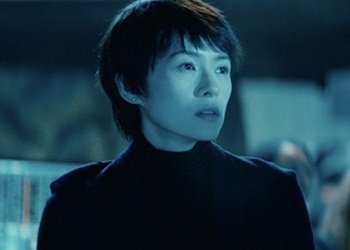
Portrayed By: Zhang Ziyi
Appears In: Godzilla: King of the Monsters
A senior mythologist and the head of Titan Research and Containment.
- Adaptational Mundanity: She and her sister Ling are ultimately an adaptation of the Shobijin from the original Mothra movie and Toho's other Mothra-featuring movies, but instead of being miniature fairies from an unspoiled mystical island, they're humans whose family have worshipped Mothra for generations and have an odd history of Hereditary Twinhood, and who show non-explicit signs of sharing a Psychic Link to their lineage's goddess.
- All Myths Are True: She firmly believes "myth is our compass" which can teach mankind how to mend our strained connections with nature and better cohabit the planet with Titans. She almost quotes the trope ad verbatim when she witnesses the Hollow Earth ruins' Titan-worshipping iconography.
- Always Identical Twins: Not only does she have an identical twin sister who is distinguishable only by her hair, she has identical twin daughters, and her family has an uncanny history of female Hereditary Twinhood in every generation.
- Ambiguously Absent Parent: Ilene's maternal family and female relatives are expanded upon, being a family descended from Mothra's ancient worshippers, who seem to consist solely of sets of identical twin girls in every generation. On the other hand, her and Ling's father, their grandfathers, and the father of Ilene's own daughters are all completely unknown, and they're conspicuously absent from the Chen family picture which only shows the female relatives; in a gender inversion of Lineage Comes from the Father.
- And This Is for...: A variation. When Godzilla, Mothra and the US Air Force arrive in Boston for the Final Battle, looking to take their planet back from King Ghidorah, Ilene says "For Serizawa" (who gave his life in a Heroic Sacrifice beforehand) before the Argo fires on Ghidorah to disorient him.
- Appeal to Familial Wisdom: She quotes a lesson that her mother used to teach her, "myth is our compass"; using it to explain why she looks to mythology as a guide on understanding the Titans. Ilene and her mother both believed that understanding the Titans through analyzing ancient peoples' recordings on them is the key to finding coexistence with them and mending mankind's relationship with nature.
- Asian and Nerdy: A Chinese woman who is Monarch's chief mythographer, as well as a Ms. Exposition. For extra points, being a Monarch mythographer is an occupation which has run in her family since her grandmother and great-aunt's generation.
- Canon Character All Along: A subtle example. It turns out roughly halfway through the film when her twin sister Ling is introduced, and when Ilene afterwards shows Mark pictures of her family who uncannily consist of sets of identical twins, that Ilene and her sister are an adaptation of the Shobijin. This is further downplayed in the novelization, where Ling is introduced earlier on than in the film.
- Convenient Replacement Character: Played With. She makes her first (movie) appearance in the same movie where Dr. Graham is killed off (and in its prequel tie-in graphic novel), and she takes over Graham's role as the non-American, female Monarch scientist who reveres and exposits about the Titans.
- Death Glare: When Mark makes a rude snip at her about Monarch's failure to make adequate preparations for a Titan mass awakening such as the eco-terrorists are trying to instigate, Ilene can only glare silently at him.
- Doing Research: After Godzilla is seemingly killed and Ghidorah usurps Godzilla's dominance of the other Titans, Ilene delves into mythological research to work out Ghidorah's true nature, discovering by piecing texts together that Ghidorah is apparently an extraterrestrial invasive species rather than an Earth-native Titan.
- Elite School Means Elite Brain: She's Monarch's top mythographer, and her bio says that she attended Tsinghua University, which has been consistently ranked as one of the best universities in the world.
- Friendly Rivalry: With Rick Stanton concerning matters like Mothra's moral alignment and the Hollow Earth theory.
- Hereditary Twinhood: She not only has a twin sister, but also identical twin daughters, and her mother and aunt are identical twins as are her grandmother and great-aunt. It's heavily implied this has something to do with their family's generations-spanning Psychic Link to Mothra, and Word of God confirms it's meant to set the Chens up as the MonsterVerse incarnation of the Shobijin.
- Heroic Lineage: She and her twin sister are both third-generation Monarch operatives in their family, after their mother and grandmother Mei before them; and their family is noted for making some of mankind's greatest evolutionary discoveries. Furthermore, the novelization outright confirms the Chens are descended from a lineage of Mothra-worshipping priestesses and have kept the stories about their goddess alive into the modern day.
- Identical Grandson: She shows some pictures of her family at one point, chronicling their history with Monarch. Not only does she have an identical twin sister, but her daughters, mother/aunt and grandmother/great aunt are also identical twins.
- Lineage Comes from the Father: Gender-Inverted. Her mother and grandmother were all Monarch operatives before her, and it's furthermore implied that they're all descended from Mothra-worshipping priestesses; whilst Ilene's father (and her own daughters' father and her mother and aunt's father) are all ambiguously absent.
- Maybe Magic, Maybe Mundane: The movie drops some subtle hints that she and her sister Ling have a Psychic Link to Mothra due to being an Adaptational Mundanity take on the Shobijin, but there's nothing solid to confirm this. It also seems pretty uncanny that at least four generations of their family (explicitly confirmed in the novelization to be descended from a lineage of Mothra-worshipping priestesses) have consisted of identical female twins. Is this all due to Mothra's influence or just a coincidence? The novelization explicitly all but confirms without a doubt that Ling does indeed have a telepathic link to Mothra.
- Ms. Exposition: Justified given her role as Monarch's senior mythologist. She knows a lot about the monsters and provides information on them (particularly from a mythographic standpoint), taking over Dr. Graham's role of expositing on twists and reveals about the creatures after Graham's death.
- Mythology Gag: That Ilene has a twin sister who is present during Mothra coming out of her cocoon might be a shout out to the "Shobijin" twins from previous Mothra films. Michael Dougherty has said in an interview that this was intentional, and that Ilene and her twin are very much the Shobijin — something made more explicit in the novelization. Further, there was a planned credits scene where the adult twins would enter a temple where Ilene's five-year-old twin daughters would be singing to the new Mothra egg mentioned in the credits.
- Precision F-Strike: After Emma Russell finishes giving Mark and Monarch her manifesto for releasing the Titans to "save the world", there's a moment of silence before Ilene breaks it with her timeless delivery."That bitch!"
- Sore Loser: Downplayed, but her hilarious response to Rick being proven right about the Hollow Earth is three sore words:"Shut up, Rick."
- Visual Pun: For the role, Zhang Ziyi wears her hair very short, in what is sometimes known as a "Pixie Cut." It's an allusion to the Shobijin, Mothra's heralds in the Toho movies, whom Ilene and her family are based on. You know, because a "pixie" is a kind of fairy.
- See here.
Dr. Rick Stanton
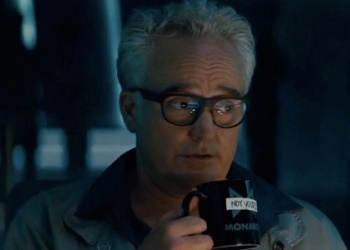
Portrayed By: Bradley Whitford
Appeared In: Godzilla: King of the Monsters
Non-canon appearances: Justice League vs. Godzilla vs. Kong 2
Monarch's crypto-sonographer, early warning specialist and resident cynic.
- Agent Mulder: He openly believes in Dr. Brooks' Hollow Earth theory, something even the other Monarch top brass around him such as Dr. Chen are clearly sceptical of, and he seems to be somewhat alienated because of it before he's proven right. His Monarch Sciences profile also reveals he was a member of SETI
 before joining Monarch.
 - The Alcoholic: Implied. He has a coffee mug with the label "NOT YOURS" and he carries around a flask.
- Bearer of Bad News: Throughout the film, he reports unfortunate and negative turns of events to the rest of the cast. Notably examples include telling everyone that they've lost track of Godzilla (apologetically saying in advance that he hates to crash the party), and solemnly reporting Godzilla's apparent death after the Oxygen Destroyer's blast which has, in turn, left Ghidorah free to take Godzilla's office.
- Captain Ersatz: According to Word of God, the character is loosely based on Rick Sanchez from Rick and Morty.
- Comical Coffee Cup: In his first scene, he's drinking from a mug with a label saying "NOT YOURS" taped on the side.
- Communications Officer: He has shades of this when most of The Team's members are gathered on the Argo's bridge; being the one who tries to track the eco-terrorists' video call, who remotely discovers that the Argo's hangar doors are jammed, and who receives and screens Admiral Stenz' video call, all from his work-station.
- The Cuckoolander Was Right: He's regarded as the Covert Group's equivalent to a conspiracy theorist for espousing Dr. Brooks' theory about the Hollow Earth, which even the rest of the top brass think is just silly. He's quite ecstatic to be proven right.
- The Cynic: A highly sarcastic man, Stanton at the start of the movie doesn't have positive expectations of the Titans, even if he isn't near-frothing with rage at them like Mark is, and he furthermore seems to lack The Government's fixation on exterminating the Titans and overconfidence that they can succeed. After Mothra cocoons, he bets against Chen that the imago form will be violent once it comes out, he expresses reservations about Castle Bravo exposing themselves to an agitated Godzilla in an attempt to calm the latter down and later about launching a nuke at Godzilla to revive him even with King Ghidorah destroying the world in Godzilla's absence, and he makes it clear during the shared Kirk Summation against Emma Russell that he believes the Titans awakening will result in nothing but "a dead, charred world overrun by monsters" regardless of Monarch's initial findings about the creatures' Fertile Feet. He's also often the Bearer of Bad News. He seems to get slightly more optimistic by the movie's end after Godzilla's victory against Ghidorah and the confirmation that Godzilla is on humanity's side, with the Creative Closing Credits describing the aftermath further confirming his initial expectations of the Titans were wrong.
- Deadpan Snarker: Rick responds to just about everything with a sarcastic quip. He calls King Ghidorah "Moe, Larry and Curly", and he jokes that he wants kids who won't have flippers from the radiation in Godzilla's lair.
- Elite School Means Elite Brain: He's Monarch's top crypto-sonographer, in charge of monitoring acoustics to track Godzilla worldwide, and his Monarch Sciences bio says that he graduated from the University of Michigan; a university which is ranked prestigiously and is compared to the Ivy League.
- Exact Time to Failure: He counts down the time to Godzilla going thermonuclear during the Final Battle.
- Friendly Rivalry: Played With. He seems to have a bit of a rivalry with Dr. Chen. They bet over whether or not Mothra will prove to be aggressive in her imago form; and Stanton is quite happy to be proven right about the Hollow Earth being real (a theory which Dr. Chen was visibly exasperated hearing him talk about earlier), rubbing it in a sore Dr. Chen's face.
- Functional Addict: Downplayed. He's implied to be The Alcoholic who has no issue drinking on the job, yet he constantly appears functional and relatively sound-minded.
- Gadgeteer Genius: He's in charge of using Monarch's satellites and bio-acoustics to monitor Titans' global passages. His profile on the official Monarch site reveals that he was previously a SETI communications engineer and a Landsat satellite-mapping technician.
- Glad He's On Our Side: He quotes the trope nearly ad verbatim after watching Godzilla unlock his Burning mode and violently obliterate King Ghidorah piece-by-piece.
- Insufferable Genius: He's very acerbic, cynical and bitterly sarcastic, but he's a very smart guy who's good at tracking the Titans' bio-acoustics.
- It Has Been an Honor: Inverted. Rick says this almost ad verbatim to Serizawa before the latter departs to make a Heroic Suicide.
- I've Never Seen Anything Like This Before: He says this almost word-for-word when commenting on Ghidorah's Hydra Problem-level Healing Factor, saying it "violates everything we know about the natural order" even by Titans' standards.
- Jumped at the Call: His Monarch Sciences bio says that joining Monarch and studying real-life Kaiju sounded like a "dream job opportunity" to him when Serizawa first offered him a job, not least due to Rick's previous work for SETI and interest in the rumors about Skull Island.
- Knew It All Along: He's not exactly humble when his theory about how Godzilla is able to travel around the world so fast is proven correct.
- Married to the Job: His profile explicitly says that his work for Monarch has taken a toll on his personal life and led to three divorces; he's truly happier in a relationship with his job than with any actual woman.
- The Medic: Downplayed. Although it apparently isn't his official job, Stanton takes on the role of a medic when treating an injured Lauren Griffin at the film's end. He also sees roughly the same amount of action as the other top brass does on average.
- Nerd Glasses: He's a Monarch brainiac who wears classic chunky black plastic glasses. Lauren Griffin even passingly calls him and the other key Monarch brass nerds at one point.
- Obligatory Joke: When Stanton and Mark spy Godzilla in the Hollow Earth whilst seeking the latter's aid to save the world from King Ghidorah, they say this:Mark Russell: Oh, my God.
Rick: -zilla! - Oh, Crap!: Aside from being the Bearer of Bad News who kicks off the top brass's Mass "Oh, Crap!" over Godzilla approaching Monster Zero; the first thing that Rick says later in the movie when he sees a supercharged Godzilla is on a countdown to exploding like an atom bomb is to exclaim, "Oh, boy!"
- One-Steve Limit: The King of the Monsters novelization features a second, unrelated Rick who lives near the Monarch outpost containing Scylla.
- OOC Is Serious Business: Somewhat downplayed example, but the more grave things immediately get, the more soft-spoken and less snarky Stanton acts. In particular, he's nothing but solemn and respectful when saying goodbye to Serizawa before the latter's Heroic Suicide.
- Plucky Comic Relief: A lot of his role in the film not involving exposition or Techno Babble is to make jokes which lighten the mood, more so than the rest of the main human cast.
- Sequel Non-Entity: He, alongside the rest of The Team from King of the Monsters, is completely absent from all the subsequent MonsterVerse movies and other instalments as of 2025, although his name makes a prominent cameo in the mid-production official teaser for the upcoming Godzilla x Kong: Supernova.
- Serial Spouse: He's middle-aged and according to his Monarch Sciences profile, he's been thrice divorced, and allegedly the fault is in himself.
- This Cannot Be!: This trope is his response when Coleman reports that the giant typhoon in which Monster Zero disappeared has abruptly changed direction, commenting that no storm is that fast; at which point Ilene realizes:Ilene: Unless it's not a storm.
Colonel Diane Foster
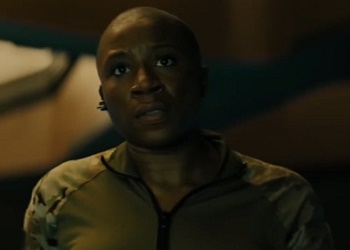
Portrayed By: Aisha Hinds
Appeared In: Godzilla: King of the Monsters
A decorated colonel who's the leader of the G-Team.
- Alternate Company Equivalent: Going along with Monarch being one to S.H.I.E.L.D., she's a Colonel Badass headquartered on an Airborne Aircraft Carrier, like Nick Fury.
- Bald of Authority: She's a tough-as-nails colonel who leads the military forces aiding Monarch.
- Bald Head of Toughness: A bald, no-nonsense, tough-as-nails Colonel Badass and Front Line General, who is handy with a sniper rifle.
- Black Boss Lady: An African-American female commanding officer in Monarch's military forces, who is constantly dressed in military camos and goes into multiple battles with the troops under her command. According to her Monarch Sciences bio, Foster is also a wife and a mother.
- Cold Sniper: She has sniping skills as Asher learns the hard way along with having a no-nonsense attitude.
- Colonel Badass: A stoic, tough-as-nails colonel who leads Monarch's G-Team, seems to be in her late 30s to early 40s, and has some impressive sniping skills. She's apparently somewhat familiar with Admiral Stenz, and though a deleted scene indicates they respect each other, Foster still seems somewhat distrustful of the Admiral based on how she looks to confirm Stenz wasn't lying about the Oxygen Destroyer after the Admiral's video call (implicitly because Stenz leans toward following The Government's orders to try killing Titans with manmade means whereas Foster puts a little more faith in what Serizawa says). Adding more to the trope, Foster is one of the most unforgiving of Emma Russell's betrayal before the latter's Motive Rant. Foster's Monarch profile notes she has a highly decorative military career and chooses only the best soldiers to train under her.
- Commander Contrarian: Averted. When Godzilla aggressively approaches Castle Bravo, Foster heeds Serizawa's insistence on standing down instead of making him an Ignored Expert, despite her strong reservations.
- Distaff Counterpart: To Admiral William Stenz. Besides being a Foil to him in King of the Monsters, she takes over his role as the military leader among the human experts.
- Foil: To Admiral Stenz. Both are high-ranking and decorated military officers who are charged with protecting human lives from the Kaiju and cooperating with Monarch in that capacity, and one is a Caucasian-American male while the other is an African-American female. However, Foster's relations with Monarch are considerably less strained as she's more likely to follow through with their advice than Stenz. Foster is portrayed as a Front Line General whereas Stenz is primarily portrayed as an officer who operates from mission control.
- Front Line General: A colonel would typically be a bit more in the back, but Foster leads the charge on foot during the Antarctica skirmish, to a lesser extent she's on the USS Argo when it oversees the Washington D.C. battle whilst her troops are participating in the battle onboard an Osprey, and she pilots an Osprey to rescue the Russells and the rest of the G-Team from a Titan-ravaged Boston during the Final Battle. Her Monarch profile mentions she's had "tactical leadership on the world's most dangerous frontlines" before joining Monarch.
- Mission Briefing: She and Dr. Graham command the briefing on Jonah's raid on Outpost 61, before Mark interrupts to say that going to the outpost (as Foster is initially planning to) is likely a decoy Jonah expects them to take. Later, she's conducting the briefing preceding the military assault on King Ghidorah's roost in Washington D.C. in the wake of the global apocalypse.
- Sequel Non-Entity: Despite her pivotal role in Monarch as the G-Team leader, Foster (and her team) are completely absent from Godzilla vs. Kong; and even in the novelization, they don't get so much as a mention.
Sam Coleman
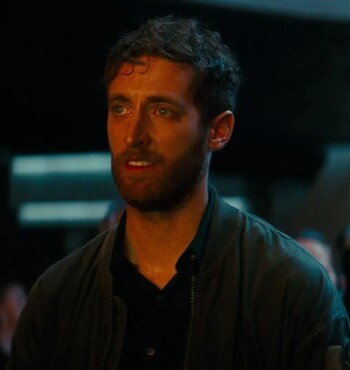
Portrayed By: Thomas Middleditch
Appeared In: Godzilla: King of the Monsters (2019)
Monarch's director of technology and communications liaison with the U.S. government.
- As You Know: When he, Graham and Serizawa first approach Mark, Coleman gives Mark a rundown on what the ORCA is and what it does even though Mark is one of the original device's co-inventors, prompting Mark to lampshade this trope and chide him.Mark: I know what the hell it is, I helped build the prototype!
- Brainy Brunette: He has curly, light-brown hair married with a distinctly stuttery disposition, and he's Monarch's director of technology who earned his bachelor's degree when he was only fourteen.
- Child Prodigy: According to his Monarch Sciences profile, Sam taught himself how to refurbish old arcade games and successfully re-sell them when he was a child, and he took up speedcubing as a mental relaxation technique.
- Cynic–Idealist Duo: Played With. He wants to form one with the far more cynical, Titan-hating, and outright unreciprocative Mark Russell from the moment they meet. Mark only starts to warm up to Coleman after he eats his Humble Pie, and even then, Mark and Coleman are only seldom in the same room.
- Deadpan Snarker: Sam makes several quips about things such as Godzilla's physical appearance and Ghidorah's name.
- Elite School Means Elite Brain: He's one of Monarch's top brains, and according to his Monarch Sciences bio, he's their director of technology who graduated from McGill and Harvard, both of which are among the world's best-ranked universities.
- The Engineer: The Chief Engineer variety. According to his Monarch Sciences bio, as the (unusually mousy) Director of Technology, Sam's in charge of overseeing all of Monarch's new proto-tech; from weapons to communications to networking.
- Et Tu, Brute?: Of all the Monarch top brass in the film, not including Mark, Sam is arguably the most dismayed once he realizes what Emma has done; to the point where he's at first in denial.
- Gadgeteer Genius: His official profile states that he's a lifelong tech whiz, having invented his first self-learning computer when he was just 15, and he oversees all of Monarch's latest tech.
- Hauled Before a Senate Subcommittee: He attends the senate hearing at the start of the film alongside Graham and Serizawa concerning the matter of the Titans, and provides what Senator Willis is admittedly partly right to call a "fifth-grade history lesson" on Titans. He's also the only member of Monarch present who takes pacifying the senators seriously even though they admittedly have a very anti-Titan bias and aren't taking Monarch nearly as seriously as they should. Coleman's Monarch Sciences profile states he's called to attend government hearings on Monarch's behalf quite frequently.
- Hidden Depths: Of all the team Sam is the staunchest at defending Emma when they believe she has gone rogue. It's not until Mark himself confirms it does he relent.
- Jock Dad, Nerd Son: According to Sam's Monarch profile, his father Michael Coleman was apparently a loud man who used to openly hope that his son would grow up to be a professional hockey player. A stark contrast to the man Sam grew into, a Gadgeteer Genius who has speaking problems and looks like he lives on pure rabbit food.
- Mission Control: Once both Serizawa and Graham have passed away, Coleman is coordinating Mark and the G-Team's search-and-rescue mission from onboard the Argo during the Final Battle in Boston.
- Nice Guy: He's an incredibly friendly guy who sees the best in almost everything and everyone – from the Titans generally to people who aren't eco-terrorists – and it's difficult to imagine that Coleman would ever hurt a fly unless his life depended on it. He even wants to be friends with Mark Russell for some reason. Coleman can be stuttering and awkward in social interactions, but he apparently gets by well enough to routinely represent Monarch in front of the United States Senate.
- One-Steve Limit: He has the same first name as the Brody child in Godzilla (2014).
- Sensitive Guy and Manly Man:
- He's the Sensitive Guy to Mark Russell's Manly Man, and he tries to befriend Mark during the movie. Sam is a skinny nerd who at first can barely speak up around other people without stuttering and stumbling his own words, and he's mainly involved in technology and indoor work compared to Mark's zoology and photography. Sam is more openly compassionate, idealistic and thoughtful about others than the bitter, cynical and emotionally egocentric Mark is. Sam's Monarch Sciences profile furthermore indicates he's more used to working remotely over participating in fieldwork, another contrast to Mark.
- It's revealed on the Monarch Sciences website that Sam and his father Michael are a case of Jock Dad, Nerd Son.
- Sequel Non-Entity: He doesn't appear in Godzilla vs. Kong at all, despite being one of Monarch's top brass in the previous movie. Nor does he get mentioned in the novelization at all.
- The Social Expert: Zig-Zagged. According to his bio, he was a self-taught retro gaming entrepreneur in his childhood, and the fact that he's regularly called on to represent Monarch in front of the U.S. Senate has got to say something. However, he's shown to also be quite a timid guy who struggles not to stutter nor stumble over his own words in a face-to-face meeting.
- Teen Genius: On top of being a Child Prodigy, his bio says that he was just 14 when he earned his bachelor's degree, and he created his first self-learning computer program just a year later.
- That Came Out Wrong: He calls himself a big fan of Mark's wife... then clarifies he meant Emma's work, and then just keeps making it worse.
Directors
- See here.
Director Guillerman
Portrayed By: Lance Reddick
Appeared In: Godzilla vs. Kong
A high-ranking Monarch director who advises Mark Russell during Godzilla's 2024 rampage.
- Adaptational Dumbass: In the novelization, he and to a lesser extent Mark have a moment of what can only be described as incompetent sheer idiocy which isn't present in the movie, when Guillerman asks whether they should be rooting for Godzilla or Mechagodzilla following the latter's emergence. Guillerman asks this after the Mecha's emergence has effectively confirmed his suspicions that Apex are indeed responsible for provoking Godzilla (who Monarch knows doesn't act aggressively unless provoked and who is essential to humanity's defence against hostile Titans), after the Mecha's emergence has effectively confirmed Apex are responsible for putting eight million people in mortal danger, and just after Guillerman has watched the Mecha intentionally raze half of Hong Kong without provocation.
- The Cameo: For Lance Reddick. Originally, he was supposed to have a larger role, but most of his scenes were cut.
- Demoted to Extra: Thanks to most of his scenes being cut, he shows up for only one scene in the final film.
- Nerves of Steel: He doesn't show any sign of panic while in the radius of one of Godzilla's rampages.
- Reasonable Authority Figure: He remains completely calm while Godzilla rampages through Hong Kong, simply suggesting to Mark that they start evacuating the city with no sign of fear. In the novelization, he's higher ranking than Mark, and he demands that the latter join him at Castle Bravo after Godzilla's first attack because Mark noticed the warning signs before anyone else. Encouraging Mark to contribute his thoughts and ideas on the situation, Guillerman distrusts Apex's involvement in Godzilla's rampage, but he refuses to jump to conclusions about them without any sufficient evidence, and he's quite alacritous to turns of events in Hong Kong.
Director Hampton
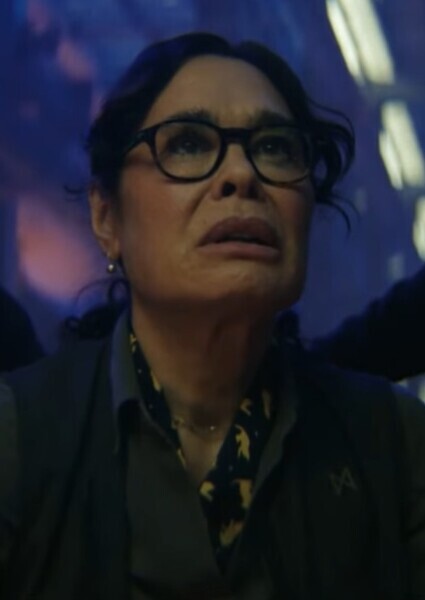
Portrayed By: Rachel House
Appeared In: Godzilla x Kong: The New Empire
The current Monarch director during the Skar King crisis.
- Reasonable Authority Figure: She's willing to hear Ilene out on Bernie's distress signal theory and authorises the expedition into the Hollow Earth to investigate it.
- One-Steve Limit: Averted. She shares a surname with Captain Russell Hampton from Godzilla (2014).
Director Reddick Barris
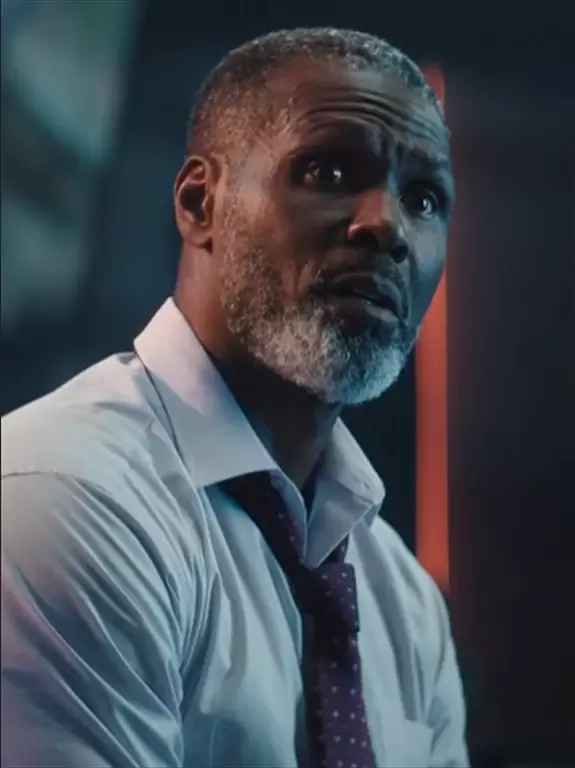
Portrayed By: Curtiss Cook
Appears In: Monarch: Legacy of Monsters
The director of Monarch in 2017, and Natalia Verdugo's superior.
Other leaders
Deputy Director Natalia Verdugo
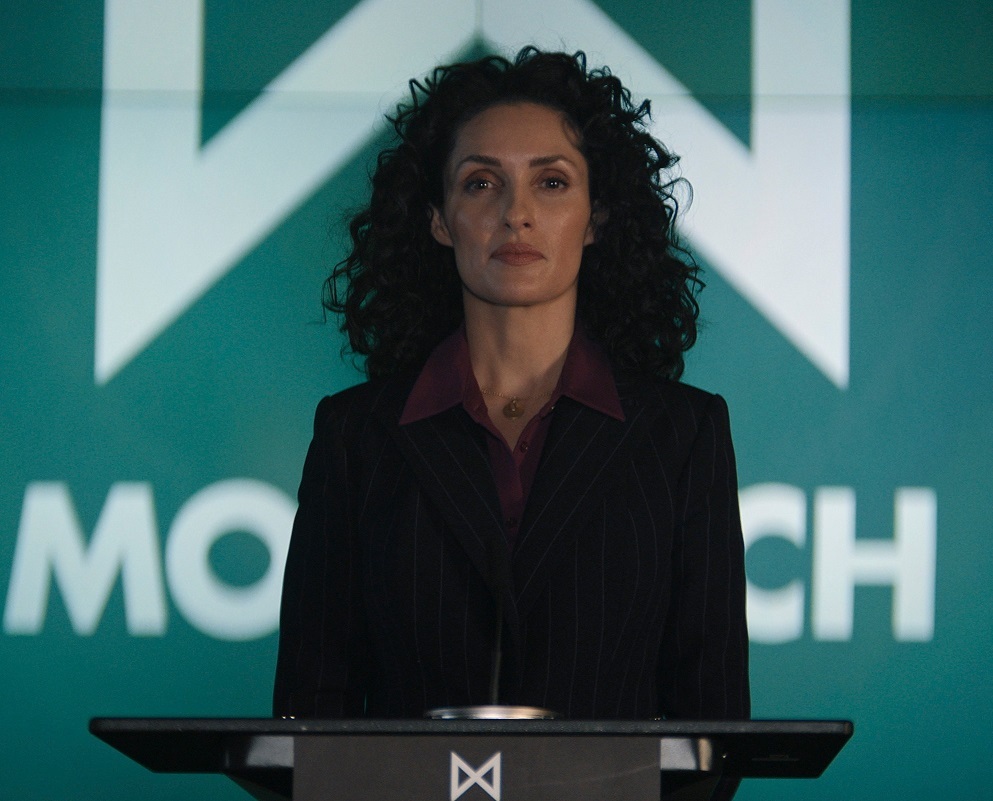
Portrayed By: Mirelly Taylor
Appears In: Monarch: Legacy of Monsters
Michelle Duvall's superior, and one of Monarch's head honchos in the aftermath of G-Day in 2015.
- Always Second Best: She's implied to be ambitious and resentful over only being deputy director of Monarch, based on her and Lee's wordplay.
- Anti-Hero Substitute: She fills in for Drs. Serizawa and Graham in the series as the head of Monarch's global operations who is involved in the series' plot, and she's a mirror to everything Serizawa stood for. Serizawa at least knows when to listen to his experts when they tell him about things he needs to know: Verdugo goes for the opposite direction. While she'll listen to her experts over gamma signals, she immediately dismisses any possibility of a Hollow Earth. Whereas Serizawa cares about multiple lives, including those working under him, Verdugo dismisses the possibility of someone trying to send out a distress call, which drives Tim to his breaking point and leads him to quit Monarch. Whereas scientists and soldiers who work under Serizawa are loyal to him, Verdugo ends up driving people that were loyal to her away, and they decide to break off from the organization.
- Blue Is Heroic: Downplayed. She wears a blue jacket in "The Way Out", and although she means well, she's established to be a flawed individual and is implied in this episode to be vain, with the series calling her effectualness into question.
- Deal with the Devil: Tim convinces her to make a deal with Brenda Holland of Applied Experimental Technologies (currently being rebranded Apex Cybernetics) in order to free May, who'd been abducted and blackmailed by them. The deal gets May out of her legal trouble with AET at the price of enabling AET/Apex to gain some lucrative influence with Monarch for future use.
- Dropped a Bridge on Him: After playing an important role as the highest-ranking Monarch official we see in the first season, she is abruptly killed by Titan X on Skull Island in the first episode of the second season.
- Failure Hero: Slightly downplayed. She means well, but in the end, she doesn't accomplish anything in the bigger picture which aids Monarch for the better (which is ironic given her outlook). She ends up alienating Cate and Kentaro from Monarch even more than they already were, making a deal with Apex Cybernetics (albeit only under pressure from Cate) which might have aided their Corporate Conspiracy which leads to Mechagodzilla's rampage in 2024, and driving Tim away from Monarch entirely and driving him, along with the entire Randa family and May, into Apex's hands.
- Fatal Flaw: Stubborness and vitriol. She's a Mean Boss with a Good Is Not Nice streak who seldom yields to the advice or warnings of others, all of which serves to entrench distrust of Monarch even deeper in the people who matter and fails to breed loyalty to her. She ends the first season as a borderline-Failure Hero who's biggest accomplishment is driving Duvall and Tim respectively away from Monarch, into employment under far more dangerous organizations.
- Good Is Not Nice: She means well, but to say her personality is rough around the edges is a little bit of an understatement. She's a Mean Boss to whom snarks and criticisms come more easily and potently than praise, she believes in The Needs of the Many over the needs of the few, and she's an ambitious ladder-climber. Deconstructed, as her unpleasantness doesn't breed much in the way of loyalty towards her in the other heroic characters, and her "needs of the many" mindset and unpleasant mistreatment of Tim are two of the major reasons why Tim quits Monarch in protest and ultimately ends up working for the much less moral Apex Cybernetics.
- Head-in-the-Sand Management: Tim certainly comes to view her as such by the end of the show's first season. Over the course of the 2015 storyline, multiple characters disparage Monarch under her deputy leadership for seemingly having skewed priorities about the threat of Titans after the tragedy of G-Day, like not doing anything about the homicidal Frost Vark in the Alaskan wilderness. In "Beyond Logic", she refuses to do anything to help the people trapped in the Axis Mundi beyond the Vile Vortices because she's still antsy about the pressure on the Vortices, which has already started calming back down — this is the last straw which leads Tim to quit Monarch.
- Hypocrite: She seems to think respect for employers isn't a two-way street. She suspends Tim just for a little bit of snark at her over the phone (and this is after Tim had just crawled his way out of a crashed helicopter as the sole survivor and hiked across miles of desert on his own), but she spends the entire series having no problem dripping acidic snark against him and others to their faces.
- Mean Boss: She's a cold, stern and job-obsessed higher-up who appears professional (despite her ambitious resentment at being second-best), but she sorely lacks Serizawa's charisma, and after she first catches wind of Tim's unauthorized venture to Tokyo for Bill Randa's files, for the rest of the series, she can't go five minutes around him without at best saying next to nothing positive, or at worst threatening to throw him out of Monarch on his ass. Showing her subordinates praise doesn't seem to come to her naturally, while being acidic and dismissive comes to her like breathing. It doesn't do Verdugo any favors in the lead-up to Tim dismissing her as a Pointy-Haired Boss for her questionable conduct and quitting Monarch.
- The Needs of the Many: In "Beyond Logic", she refuses to pool any resources into investigating the distress call originating from the Hollow Earth because she's focused on getting Monarch operational and protecting humanity at large from a possible imminent wave of Titan events, much to Tim's consternation.
- Pet the Dog: The one time when she isn't being cold, belligerent or downright acidic is when she takes the time to personally wait at a hospitalized Kentaro's beside with Tim for him to wake up, and when he does, she's sympathetic as she fills him in on his half-sister and friends' apparent deaths.
- Pointy-Haired Boss: Shaw blatantly considers her one, and he's not wrong that she tends to focus more on human problems than on pre-emptively preparing the world for future Titan problems, even in the wake of the devastation wrought during G-Day. At the end of the series, Tim comes around to Shaw's view, and he tells Verdugo to her face that Shaw might have been right about Monarch, but he was definitely right about her.
- Smug Snake: Though she raises valid points many times, she's not as smart or competent as she thinks she is. Her interrogation of Lee, which starts with her feeling she's in complete control and can afford to play the good cop, turns into a Hannibal Lecture with Lee getting under her skin and ending up the victor. By the end of the series, Verdugo's decisions and conduct have driven multiple characters that were once loyal to her away from Monarch into the hands of more proactive-seeming but dangerous groups and organizations, like Shaw's Renegade Splinter Faction and the much more malignant Apex Cybernetics.
- Tranquil Fury: She almost never raises her voice above a whisper nor does she physically lash out, even when she's simmering with anger (which is very often), such as when she realizes Tim has triggered a citywide Titan evacuation drill as a fire alarm distraction or when Tim tells her to her face that she's lived down to everything Shaw said Monarch was.