

<meta name="google-site-verification" content="A0Hkdwjhm5g-iCzoctZ4mYl3nGpRp1x56PWznB-hC3U" />

This web site and blog is intended to act as a hub for the global community of scholars working on military occupation as a form of alien rule and as a dynamic power relationship between occupiers and occupied.
Military Occupations have been a persistent feature of international politics for at least the past two hundred years since the French Revolution. Many territories are still subject to various forms of military occupation and rule today. Yet although specific cases have been studied in great detail, this research is highly fragmented. Scholars from different disciplines, studying different territories or time periods, rarely talk to each other. The Occupation Studies Research Network promotes the exchange of ideas, the sharing of information, and aims to encourage a more systematic, comprehensive and interdisciplinary conceptual understanding of the phenomenon of military occupation.
Recent articles

Conference Report: Occupation and Empire
Justin F. Jackson, University of Massachusetts Amherst, USA
The seventh and final report on the Network conference in July 2025 discusses intersections between occupation and empire, spanning temporal and spatial divisions from colonial America to decolonization in Africa and Asia.

Anthropology in Occupation Studies
Maria Padrón Hernández, Malmö University, Sweden
Anthropologists have been studying occupation for a very long time. How does social anthropology fit into new and emerging trends in Occupation Studies?

Conference Report: Gender and Occupation
Hannah Cogan, King’s College London, UK
In the sixth article in the series Hannah Cogan discusses how gendered hierarchies play out in the unequal power distributions between occupiers and occupied, and the ways that post-conflict societies develop new concepts of national identity and self-understanding.

The Study of Occupations: The Who, the What, and the How
Derk Venema, Open University of the Netherlands
What is an occupation and how should different cases of occupation be studied? Derk Venema suggests that interactions between different academic disciplines and nationalities can help yield a growing body of knowledge and insights.

Conference Report: Occupation, War and Violence
Alessandro Capone, Università di Salerno, Italy
In the fifth article in the series, Alessandro Capone discusses how the interaction between military occupation, armed resistance and civil wars produced escalating forms of violence that shaped occupation regimes and profoundly influenced post-war reconstruction.

Conference Report: Occupation and Culture
Odila Schröder, Heidelberg University, Germany
The fourth article in the series discusses the four conference panels on Occupation and Culture. Odila Schröder explores how individual papers might speak to one another, highlighting common themes and methodologies.

Conference Report: International Law of Occupation, Politics and the Fate of Occupied Territory
Aïda Tamer Chammas, Independent International Law Researcher, UK
The third article in the series of reports on the Network conference describes how despite being realists, panelists still held out hope that international law could help bring justice to populations living under occupations.

Who decides what an occupation is? Reflections on flight and displacement, place and time.
Ismee Tames, NIOD and University of Utrecht, Netherlands
In her keynote lecture at the recent Network conference, Professor Tames suggested that an indigenous, non-western understanding of place and time can transform how we think about occupation.

Conference Report: Occupation from Below / Lived Experiences
Chloë Pieters, University of Oxford, UK
The second article in a series of reports on the Network conference in July discusses panels on the theme of Occupation from Below / Lived Experiences.

Confererence Report – Occupation Power and Authority
Emmanuel Debruyne, UCLouvain, Belgium
The first of a series of reports on the Network conference in July discusses presentations given in panels on the theme of Occupation, Power and Authority.

Colonized Occupiers and Occupied Colonies
Rebekah Hodge, University College London, Laure Humbert,University of Manchester, Élise Mazurié, University of Freiburg, Sneha Reddy, Bangassou, Central African Republic and Sara-Jane Vigneault, University of Cambridge
This panel focuses on the period of the two world wars and their aftermaths,drawing attention to the links between imperial and occupation policies and practices within and across empires.

Comparing and contrasting total war-era occupations in Europe (1914-1948)
Samuël Kruizinga, University of Amsterdam, Netherlands
The panel presented here focuses on comparisons and entanglements between different types of occupation in the age of total warfare, with a view to cutting across some of the typological distinctions that hide elements of continuity or convergence among various occupation policies and experiences.

Life Writing and the Lived Experience of Occupation, 1914-2022
Sophie De Schaepdrijver, Pennsylvania State University and Tammy M. Proctor, Utah State University, USA
Our panel provides examples of how life writing might help scholars explore occupied civilians’ relationships and intimate encounters with each other and their occupiers. Diaries, letters, logbooks, poetry, photographs, and ephemera express patterns that document the impact of occupation. We conclude with an invitation to Network members to contribute to a new project.

Architecture as an Instrument of Social and Cultural Change in Occupied Germany after 1945
Johanna Blokker and Antoine Beaudoin, Brandenburg University of Technology, Cottbus, Germany
The vast majority of Allied interventions in Germany’s built environment – comprising hundreds of buildings for purposes ranging from education to housing to healthcare – continue to be overlooked. The panel aims to call attention to these forgotten or neglected but still extant artefacts as an untapped resource of insights into the Occupation.

Entangled Experiences: Power, Colonialism and Gender in Occupied Germany and Japan
Christine de Matos, The University of Notre Dame Australia and The National Coalition of Independent Scholars
The panel on Entangled Experiences in Occupied Germany and Japan compares and interrogates interactions in the occupier home and supporting communities. It aims to give voice to underrepresented actors in each of the two cases of occupation discussed in this panel: that of women and children and the non-white occupier.

Prestige, Authority, and Insecurity in the Occupied Rhinelands, 1918-1923 and 1945-55
Félix Streicher, Maastricht University, Netherlands and Drew Flanagan, University of Pittsburgh at Bradford, USA
This panel brings together three papers that consider the challenges that different small, vulnerable, or weakened Allied occupying powers faced in establishing authority and projecting prestige in the occupied Rhineland during Europe’s two post-war periods.

What is an Occupation? On the Boundaries of a Disputed Subject
Camilo Erlichman, Maastricht University, Netherlands and Christopher Knowles, King’s College London, UK
In this extended article, the Network convenors discuss three different but inter-related conceptual understandings of occupation – for international lawyers, political scientists and historians – as an introduction to the Occupation Studies conference in July and to help answer the question ‘What is an occupation?’

Rethinking the Dynamics of Occupation: Time and Space in Diaries from the Occupied Netherlands, Ukraine and France (1940-1945)
Laura Eckl (Bergische University of Wuppertal) and Gaëlle Fisher (Leibniz Institute for the History and Culture of Eastern Europe), Germany
In the fifth article in the series, by examining concepts of time, temporality and space through the lens of the history of everyday life, we aim to shed light on similarities and differences of experiences in various occupied societies throughout Europe.

Film Industry, Moviegoing, and Nonfiction Cinema in Occupied Italy (1943-1945)
Paolo Villa, University of Parma, Italy
The fourth article in the series discusses cinema as a complex and multi-layered social institution that both reflects a historical moment and actively acts in and influences it. This panel examines cinema and films as historic objects within the broader context of the occupation, and as privileged historical sources for investigating the occupation at large.

Occupation and Annexation during the Second World War. The Case of Luxembourg
Joé Voncken, University of Luxembourg
The third article in the series situates Luxembourg’s occupation during the Second World War within a broader comparative framework and understanding of occupation, exploring the institutional and societal impact of occupation and integration policies in a small, de facto annexed state.

Connecting Aid Operations and Occupation
Brian Drohan, U.S. Military Academy, West Point and Margot Tudor, City University of London
The second article in the series introduces the panel on Military Humanitarianism, which challenges the idea of occupation as a wartime or immediately post-war activity, revealing the slipperiness between wartime/peacetime boundaries.
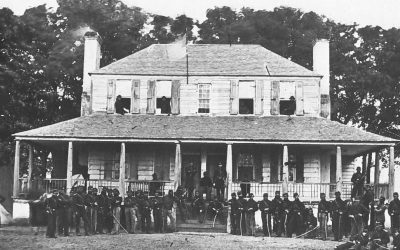
Under American Occupation
Aaron Sheehan-Dean, Louisiana State University, USA
The first of a series introducing some of the panels at the Network conference in July 2025 offers a long view of American occupation practices from the late C18 to the Civil War and late C19 formal imperialism. By comparing and contrasting Native American, white and Black American, Puerto Rican, and Filipino reactions, we can see patterns of both resistance and engagement with occupying forces.

The use of Literary Narratives as Historical Resources in the Study of Military Occupation
Maria Tudosescu, University of Tübingen, Germany and Aix-Marseille University, France
The interdependence between literary narrative forms and historical research has been highlighted by many scholars, most notably Hayden White. But how can literary narratives serve as valuable resources for studying historical phenomena?

The Emergence of the Concept of “Illegal Occupation” in International Law
Yaël Ronen, Academic Centre for Science and Law and Minerva Center for Human Rights at the Hebrew University in Jerusalem, Israel
The purpose of this article is to delineate the emergence of occupation as a normative concept in international discourse, namely as a phenomenon that can be labeled as legal or illegal.

A lesson still to be learnt from the Nazi past in Germany: Occupation is not peace
Tatjana Tönsmeyer, University of Wuppertal, Germany
It is widely unknown to the broader public in Germany that in the countries occupied by Nazi Germany, most of the victims were civilians who died because of occupation violence.

Walking on Stolen Land: Colonialism versus Occupation in Australian History
Nadia Wheatley, Independent scholar and author, Australia.
Occupation Studies offers a new way of thinking about what has been happening on the continent of Australia since the First Fleet arrived in January 1788.

Ukraine – two years on
Ferenc Laczó, Maastricht University, Netherlands and Tarik Cyril Amar, Koç University, Istanbul, Turkey.
Following the second anniversary of the Russian invasion of Ukraine, two scholars who contributed to the previous article on this blog on Ukraine- one year on, provide an update on what, in their view, has changed over the past year, and what has stayed the same?

The Intricacies of Attempting a Political Purge during the Allied Occupation of Italy, 1943-1945
Giovanni Brunetti, University of Verona, Italy.
The local delegations of the Italian High Commissions Against Fascism illustrate some of the difficulties that arise when occupiers and a new national government implement a political purge, as their interests change over time and no longer align.

The Codification of the Law of Occupation
Jonathan Gumz, University of Birmingham, UK.
In the sixth and final article in this series, Jonathan Gumz discusses how codification of the law of occupation was intended to contain conflict, but left open potential paths to the very type of uncontained conflict that it sought to avoid.

The First Allied Occupation – France 1815-18
Beatrice de Graaf, Utrecht University, NL.
This second article on the remarkably successful Allied occupation of France, 1815-18, discusses what made it new and innovative, and why it was subsequently forgotten.
Interested in joining?
The Occupation Studies Research Network is intended to support scholars in any discipline, who are actively researching or who have recently completed work on some aspect of the subject of Military Occupation. Membership is free, and the network is not limited to any particular time period or national cases of occupation. Find out about how to apply for membership by clicking on the button below.