-
Original Article01-15-2025
Frequency, financial impact, and factors associated with cost outliers in intensive care units: a cohort study in Belgium
Critical Care Science. 2025;37:e20250207
Abstract
Original ArticleFrequency, financial impact, and factors associated with cost outliers in intensive care units: a cohort study in Belgium
Critical Care Science. 2025;37:e20250207
DOI 10.62675/2965-2774.20250207
Views348ABSTRACT
Objective
This study aimed to explore the association between high outliers and intensive care unit admissions and to identify the factors contributing to high intensive care unit costs.
Methods
This retrospective cohort study used data from 17 Belgian hospitals from 2018 and 2019. The study focused on the 10 most frequently admitted diagnosis-related groups in the intensive care unit. The dataset included medical discharge summaries and cost per stay from the hospital perspective.
Results
A total of 39,279 hospital stays were analyzed, 11,124 of which were intensive care unit admissions; additionally, 2,500 of these stays were high outliers. The proportion of high outliers was significantly greater in the intensive care unit group, and admission to the intensive care unit was significantly associated with high outliers in the multivariate analyses. Factors associated with high intensive care unit outliers included the medical diagnosis-related group category, patients from nursing homes, intensive care unit stay duration exceeding 4 days, and specific technical procedures (measurement of intracranial pressure, continuous hemofiltration, and mechanical ventilation).
Conclusion
Admission to the intensive care unit increases the likelihood of being classified as an outlier, thus significantly impacting hospital costs. This study identified factors that can be used to predict intensive care unit outliers, which can enable adjustments to diagnosis-related group-based funding for intensive care units.
Keywords:BelgiumCost and cost analysisDiagnosis-related groupsFinancial management, hospitalHealth care economics and organizationsHealth policeHospital costsintensive care unitsSee moreViews348

Abstract
Original ArticleFrequency, financial impact, and factors associated with cost outliers in intensive care units: a cohort study in Belgium
Critical Care Science. 2025;37:e20250207
DOI 10.62675/2965-2774.20250207
Views348ABSTRACT
Objective
This study aimed to explore the association between high outliers and intensive care unit admissions and to identify the factors contributing to high intensive care unit costs.
Methods
This retrospective cohort study used data from 17 Belgian hospitals from 2018 and 2019. The study focused on the 10 most frequently admitted diagnosis-related groups in the intensive care unit. The dataset included medical discharge summaries and cost per stay from the hospital perspective.
Results
A total of 39,279 hospital stays were analyzed, 11,124 of which were intensive care unit admissions; additionally, 2,500 of these stays were high outliers. The proportion of high outliers was significantly greater in the intensive care unit group, and admission to the intensive care unit was significantly associated with high outliers in the multivariate analyses. Factors associated with high intensive care unit outliers included the medical diagnosis-related group category, patients from nursing homes, intensive care unit stay duration exceeding 4 days, and specific technical procedures (measurement of intracranial pressure, continuous hemofiltration, and mechanical ventilation).
Conclusion
Admission to the intensive care unit increases the likelihood of being classified as an outlier, thus significantly impacting hospital costs. This study identified factors that can be used to predict intensive care unit outliers, which can enable adjustments to diagnosis-related group-based funding for intensive care units.
Keywords:BelgiumCost and cost analysisDiagnosis-related groupsFinancial management, hospitalHealth care economics and organizationsHealth policeHospital costsintensive care unitsSee more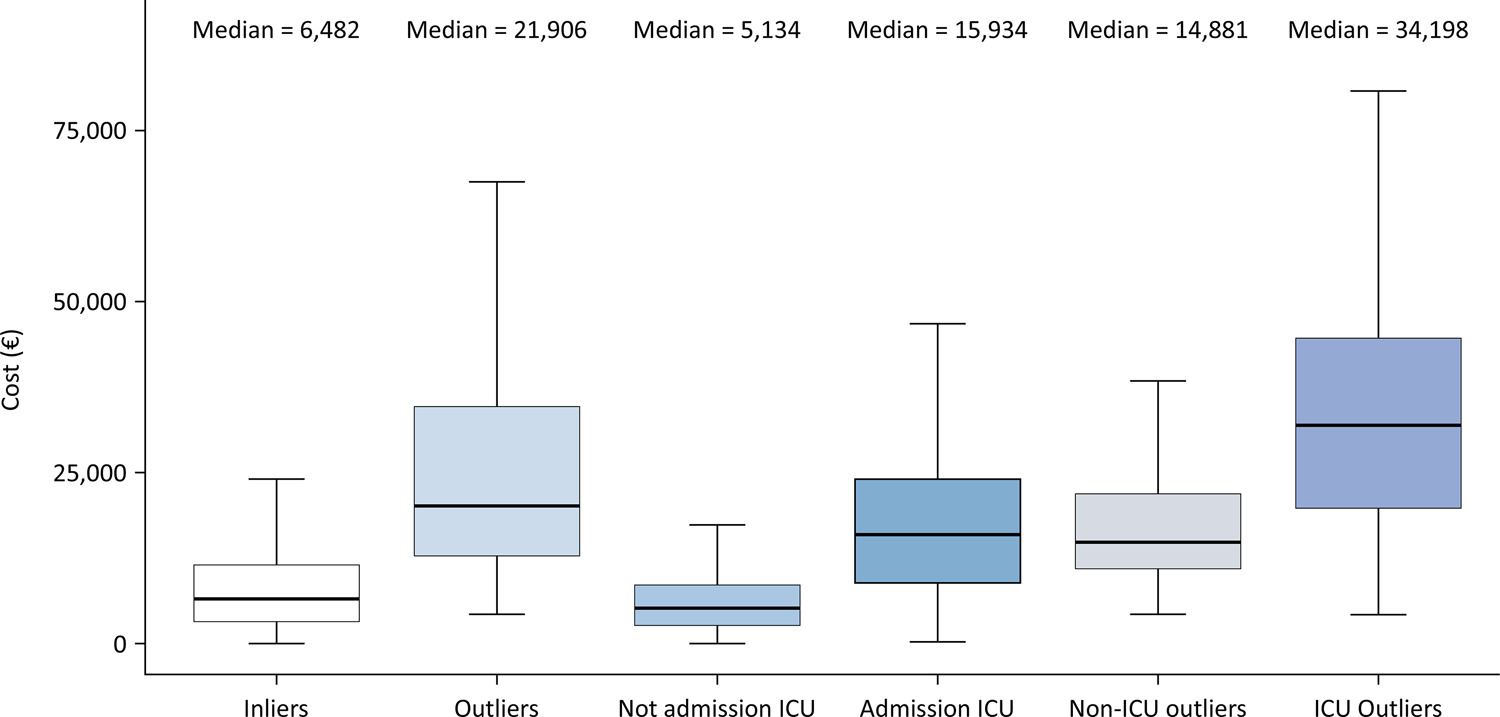
-
Review Article06-05-2023
High-value care for critically ill oncohematological patients: what do we know thus far?
- Fernanda Chohfi Atallah
 ,
, - Pedro Caruso ,
- Antonio Paulo Nassar Junior ,
- Andre Peretti Torelly ,
- Cristina Prata Amendola , [ ... ],
- Thiago Gomes Romano
Abstract
Review ArticleHigh-value care for critically ill oncohematological patients: what do we know thus far?
Critical Care Science. 2023;35(1):84-96
DOI 10.5935/2965-2774.20230405-en
- Fernanda Chohfi Atallah ,
- Pedro Caruso ,
- Antonio Paulo Nassar Junior ,
- Andre Peretti Torelly ,
- Cristina Prata Amendola ,
- Jorge Ibrain Figueira Salluh ,
- Thiago Gomes Romano
Views421ABSTRACT
The number of patients with cancer requiring intensive care unit admission is increasing around the world. The improvement in the pathophysiological understanding of this group of patients, as well as the increasingly better and more targeted treatment options for their underlying disease, has led to a significant increase in their survival over the past three decades. Within the organizational concepts, it is necessary to know what adds value in the care of critical oncohematological patients. Practices in medicine that do not benefit patients and possibly cause harm are called low-value practices, while high-value practices are defined as high-quality care at relatively low cost. In this article, we discuss ten domains with high-value evidence in the care of cancer patients: (1) intensive care unit admission policies; (2) intensive care unit organization; (3) etiological investigation of hypoxemia; (4) management of acute respiratory failure; (5) management of febrile neutropenia; (6) urgent chemotherapy treatment in critically ill patients; (7) patient and family experience; (8) palliative care; (9) care of intensive care unit staff; and (10) long-term impact of critical disease on the cancer population. The disclosure of such policies is expected to have the potential to change health care standards. We understand that it is a lengthy process, and initiatives such as this paper are one of the first steps in raising awareness and beginning a discussion about high-value care in various health scenarios.
Keywords:Cost of illnesscritical illnessHospital costsintensive care unitsLow-value careNeoplasmsPatient care managementSee moreViews421Abstract
Review ArticleHigh-value care for critically ill oncohematological patients: what do we know thus far?
Critical Care Science. 2023;35(1):84-96
DOI 10.5935/2965-2774.20230405-en
- Fernanda Chohfi Atallah ,
- Pedro Caruso ,
- Antonio Paulo Nassar Junior ,
- Andre Peretti Torelly ,
- Cristina Prata Amendola ,
- Jorge Ibrain Figueira Salluh ,
- Thiago Gomes Romano
Views421ABSTRACT
The number of patients with cancer requiring intensive care unit admission is increasing around the world. The improvement in the pathophysiological understanding of this group of patients, as well as the increasingly better and more targeted treatment options for their underlying disease, has led to a significant increase in their survival over the past three decades. Within the organizational concepts, it is necessary to know what adds value in the care of critical oncohematological patients. Practices in medicine that do not benefit patients and possibly cause harm are called low-value practices, while high-value practices are defined as high-quality care at relatively low cost. In this article, we discuss ten domains with high-value evidence in the care of cancer patients: (1) intensive care unit admission policies; (2) intensive care unit organization; (3) etiological investigation of hypoxemia; (4) management of acute respiratory failure; (5) management of febrile neutropenia; (6) urgent chemotherapy treatment in critically ill patients; (7) patient and family experience; (8) palliative care; (9) care of intensive care unit staff; and (10) long-term impact of critical disease on the cancer population. The disclosure of such policies is expected to have the potential to change health care standards. We understand that it is a lengthy process, and initiatives such as this paper are one of the first steps in raising awareness and beginning a discussion about high-value care in various health scenarios.
Keywords:Cost of illnesscritical illnessHospital costsintensive care unitsLow-value careNeoplasmsPatient care managementSee more
- Fernanda Chohfi Atallah
-
Original Article - Clinical Research01-30-2012
Financial impact of nosocomial infections in the intensive care units of a charitable hospital in Minas Gerais, Brazil
Revista Brasileira de Terapia Intensiva. 2012;24(4):357-361
Abstract
Original Article - Clinical ResearchFinancial impact of nosocomial infections in the intensive care units of a charitable hospital in Minas Gerais, Brazil
Revista Brasileira de Terapia Intensiva. 2012;24(4):357-361
DOI 10.1590/S0103-507X2012000400011
Views202See moreOBJECTIVE: Infections in intensive care units are often associated with a high morbidity and mortality in addition to high costs. An analysis of these aspects can assist in optimizing the allocation of relevant financial resources. METHODS: This retrospective study analyzed the hospital administration and quality in intensive care medical databases [Sistema de Gestão Hospitalar (SGH)] and RM Janus®. A cost analysis was performed by evaluating the medical products and materials used in direct medical care. The costs are reported in the Brazilian national currency (Real). The cost and length of stay analyses were performed for all the costs studied. The median was used to determine the costs involved. Costs were also adjusted by the patients' length of stay in the intensive care unit. RESULTS: In total, 974 individuals were analyzed, of which 51% were male, and the mean age was 57±18.24 years. There were 87 patients (8.9%) identified who had nosocomial infections associated with the intensive care unit. The median cost per admission and the length of stay for all the patients sampled were R$1.257,53 and 3 days, respectively. Compared to the patients without an infection, the patients with an infection had longer hospital stays (15 [11-25] versus 3 [2-6] days, p<0.01), increased costs per patient in the intensive care unit (median R$9.763,78 [5445.64 - 18,007.90] versus R$1.093,94 [416.14 - 2755.90], p<0.01) and increased costs per day of hospitalization in the intensive care unit (R$618,00 [407.81 - 838.69] versus R$359,00 [174.59 - 719.12], p<0.01). CONCLUSION: Nosocomial infections associated with the intensive care unit were determinants of increased costs and longer hospital stays. However, the study design did not allow us to evaluate specific aspects of cause and effect.
Views202Abstract
Original Article - Clinical ResearchFinancial impact of nosocomial infections in the intensive care units of a charitable hospital in Minas Gerais, Brazil
Revista Brasileira de Terapia Intensiva. 2012;24(4):357-361
DOI 10.1590/S0103-507X2012000400011
Views202See moreOBJECTIVE: Infections in intensive care units are often associated with a high morbidity and mortality in addition to high costs. An analysis of these aspects can assist in optimizing the allocation of relevant financial resources. METHODS: This retrospective study analyzed the hospital administration and quality in intensive care medical databases [Sistema de Gestão Hospitalar (SGH)] and RM Janus®. A cost analysis was performed by evaluating the medical products and materials used in direct medical care. The costs are reported in the Brazilian national currency (Real). The cost and length of stay analyses were performed for all the costs studied. The median was used to determine the costs involved. Costs were also adjusted by the patients' length of stay in the intensive care unit. RESULTS: In total, 974 individuals were analyzed, of which 51% were male, and the mean age was 57±18.24 years. There were 87 patients (8.9%) identified who had nosocomial infections associated with the intensive care unit. The median cost per admission and the length of stay for all the patients sampled were R$1.257,53 and 3 days, respectively. Compared to the patients without an infection, the patients with an infection had longer hospital stays (15 [11-25] versus 3 [2-6] days, p<0.01), increased costs per patient in the intensive care unit (median R$9.763,78 [5445.64 - 18,007.90] versus R$1.093,94 [416.14 - 2755.90], p<0.01) and increased costs per day of hospitalization in the intensive care unit (R$618,00 [407.81 - 838.69] versus R$359,00 [174.59 - 719.12], p<0.01). CONCLUSION: Nosocomial infections associated with the intensive care unit were determinants of increased costs and longer hospital stays. However, the study design did not allow us to evaluate specific aspects of cause and effect.

Hospital costs Archives - Critical Care Science (CCS)


